Art Exhibition at the European Union Headquarters
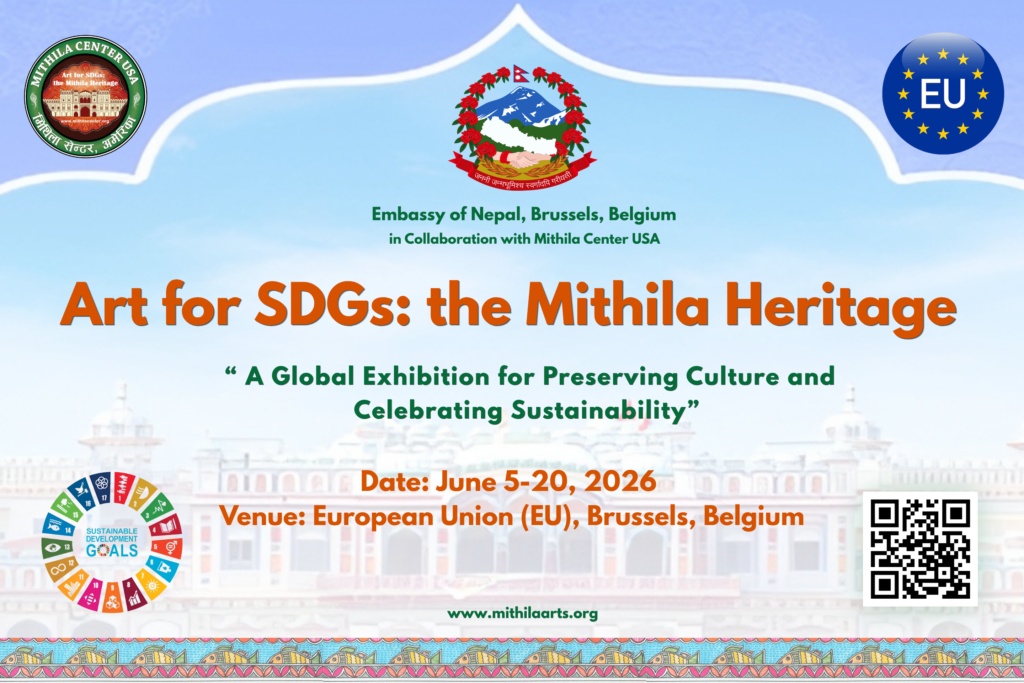
Mithila Center USA proudly announces a landmark presentation of Art for SDGs: The Mithila Heritage at the European Union Headquarters in Brussels, Belgium—a defining moment in the global journey of Mithila art. Set within one of the world’s most influential diplomatic hubs, this exhibition will bring the powerful visual language of Mithila to the forefront of international dialogue. Through intricate storytelling, symbolism, and centuries-old artistic traditions, the exhibition will interpret key themes of the United Nations Sustainable Development Goals, including sustainability, climate action, and social equity.
More than an exhibition, this event represents a cultural bridge—connecting heritage with global policy, tradition with innovation, and local artistic voices with international audiences. It marks a significant step in elevating Mithila art onto the world stage, fostering cross-cultural understanding, and demonstrating how indigenous art forms can contribute meaningfully to today’s most pressing global conversations.
Featured Artists and Arts
Diversity & Cultural Coexistence
Since the beginning of my journey as a Mithila painter, I have devoted myself to creating a dialogue between the ancient visual traditions of Mithila and the contemporary realities of our world. Through natural colors, spiritual aesthetics, and indigenous techniques inherited from my homeland, I strive to preserve the soul of Mithila art while presenting it within a global contemporary context.
My grandmother remains the eternal source of my inspiration. Almost everything I know about Mithila painting has been passed down through generations of women in my family and community. I grew up watching my grandmother and other women adorn the mud walls and earthen floors of our home during festivals and sacred ceremonies. Their hands transformed ordinary spaces into living sanctuaries of beauty, devotion, and cultural memory.
As a child, I was deeply mesmerized by the raw vitality of these drawings. For newlywed couples, my grandmother painted sacred Kohbar compositions upon the walls; during festivals, she created delicate Aripan patterns on mud floors using rice paste. Under the glow of Deepawali lamps, those drawings appeared almost celestial, carrying within them stories of faith, celebration, and collective belonging. In those sacred moments, our home became a space where tradition, spirituality, and art merged into one living experience.
The skills I inherited from these women became not merely artistic techniques, but a cultural consciousness. Through my work, I attempt to fuse this inherited visual language with contemporary social and environmental concerns. Deep within, I feel that whenever I paint, I carry the spirit and blessings of my grandmother with me.
Through the ancient vocabulary of Mithila art, my paintings seek to establish a living dialogue between tradition, humanity, and the future of our planet. Rooted in the cultural soil of Mithila, my works resonate with the ideals embodied in the United Nations Sustainable Development Goals, while remaining deeply grounded in the symbols, emotions, and collective memories of rural life.
Sacred trees, lotus ponds, flowing rivers, birds, animals, temples, and village gatherings emerge in my compositions not merely as decorative motifs, but as timeless metaphors for ecological harmony, peace, dignity, education, and coexistence. In my artistic vision, nature is not separate from humanity; it is the very soul of civilization itself. The intricate Godna patterns, vibrant borders, and expressive figures reflect the resilience of indigenous wisdom and the continuity of cultural heritage.
Whether portraying the living heritage of Janakpur, the spiritual serenity of Swayambhunath, or the joy of learning beneath village trees, my paintings become an appeal for compassion, environmental awareness, and collective responsibility. I believe Mithila painting possesses a universal language — one capable of connecting local traditions with global aspirations.
These artworks are my humble offering toward a more peaceful, sustainable, and culturally awakened world — a world where tradition is not forgotten, but reborn through art.
Dialogue Beneath the Tree of Sustainable Awakening
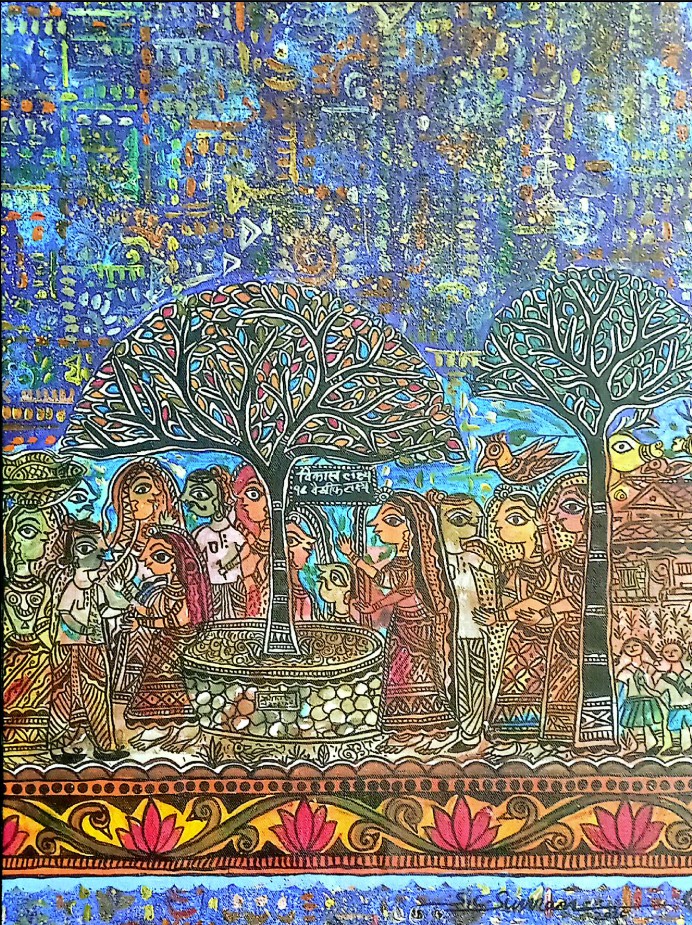
This evocative Mithila Painting by SC Suman beautifully embodies the spirit of the 17 United Nations Sustainable Development Goals through the lens of rural consciousness and collective participation. At the heart of the composition stands a magnificent shady tree, symbolizing wisdom, shelter, and ecological harmony. Beneath it, village men and women gather on a traditional platform, actively engaged in dialogue and awareness regarding their rights and sustainable development. A woman educator explains the SDG goals on a hanging blackboard, reflecting empowerment through knowledge.
The vivid deep-blue sky, birds resting on branches, and harmonious presence of animals celebrate humanity’s bond with nature. Traditional Mithila “Godna” motifs enrich the visual language with symbolic depth. Along the lower canvas, vibrant ornamental borders, flowing river waves, and five-petaled red lotus motifs signify prosperity, purity, unity, and cultural continuity. The expressive faces and radiant colors reveal the emotional depth, seriousness, and enduring environmental consciousness rooted in Mithila tradition.
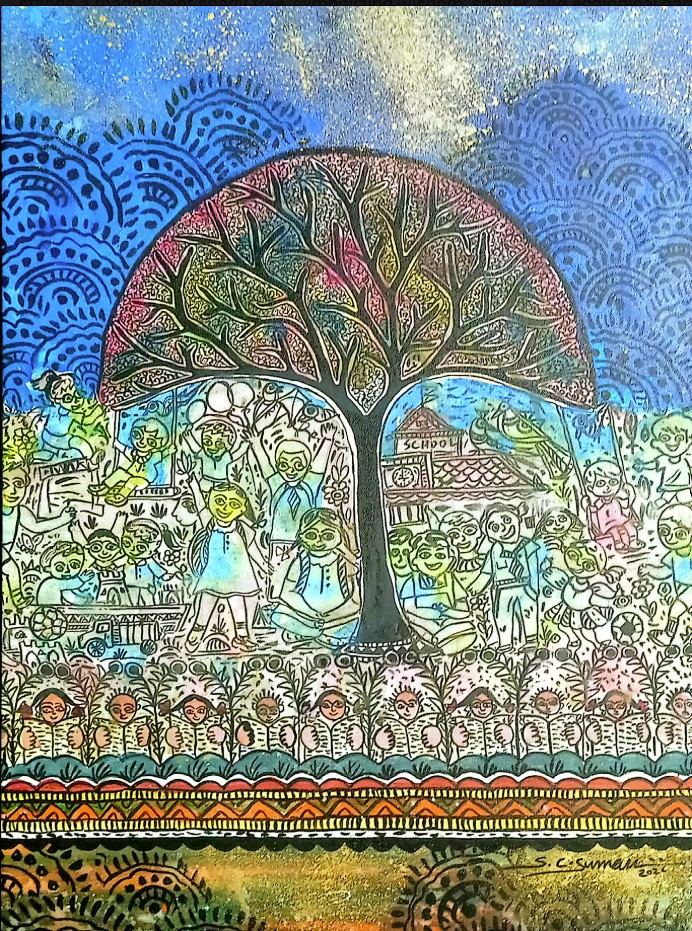
Beneath the Tree of Knowledge: Vision of Quality Education
This vibrant Mithila painting by SC Suman beautifully reflects the spirit of the United Nations Sustainable Development Goals, especially SDG 4 — Quality Education. At the heart of the composition stands a magnificent shade-giving tree beside a lively village school, symbolizing wisdom, protection, and continuous growth. Children of different age groups are joyfully engaged in learning, creativity, games, and cultural activities, portraying education as the foundation of a bright and fearless future. The colorful balloons, flying kites, singing birds, and smiling faces express freedom, hope, harmony, and social upliftment. The school clock symbolizes discipline and humanity’s collective commitment to achieving the SDGs within the determined time frame. Traditional Mithila motifs, Godna patterns, vibrant borders, and nature-inspired imagery enrich the canvas with cultural depth, while the artist’s expressive use of colors and emotions powerfully celebrates education, community, and sustainable progress.
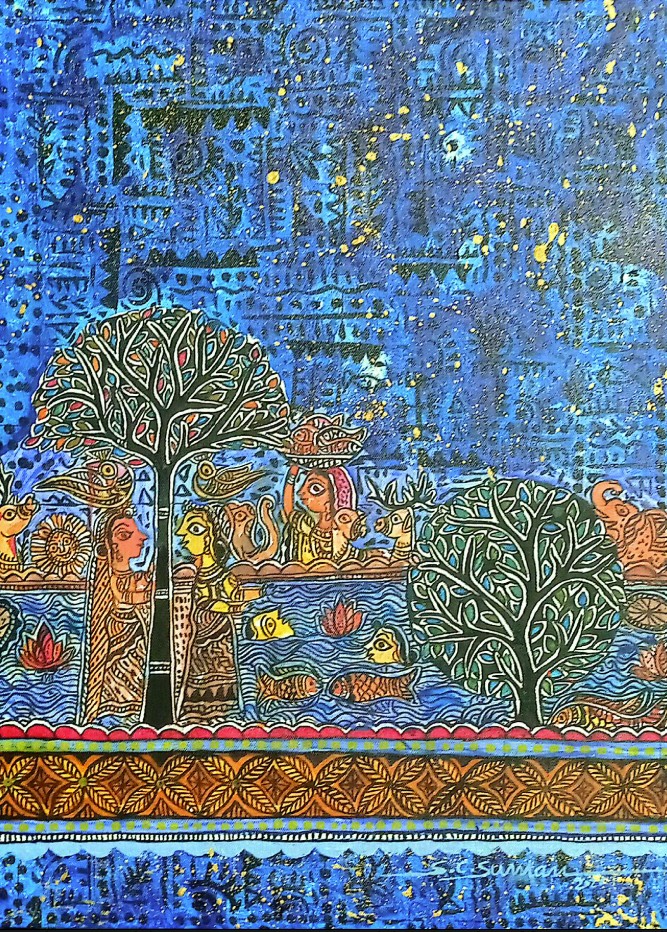
Harmony of Nature and Humanity: Mithila Vision for the UN SDG
This magnificent painting by Mithila artist SC Suman powerfully reflects the spirit of the United Nations Sustainable Development Goals through the vibrant language of traditional Mithila art. Beneath the deep blue sky, grand sacred trees symbolize protection, ecological balance, and the continuity of life. The village pond, filled with blooming lotus flowers, floating leaves, and colorful fish, represents purity, prosperity, and the preservation of aquatic life. Fish signify abundance and harmony with water ecosystems, while elephants symbolize strength and wisdom, deer embody peace and gentleness, and tigers represent courage and the protection of forests and biodiversity. Women engaged in daily activities portray dignity, self-reliance, and social progress. Birds singing beside joyful children create an atmosphere of unity and hope. Through intricate Godna-inspired patterns, vibrant borders, and expressive human emotions, the artwork beautifully conveys climate action, responsible living, environmental conservation, and humanity’s timeless bond with nature.
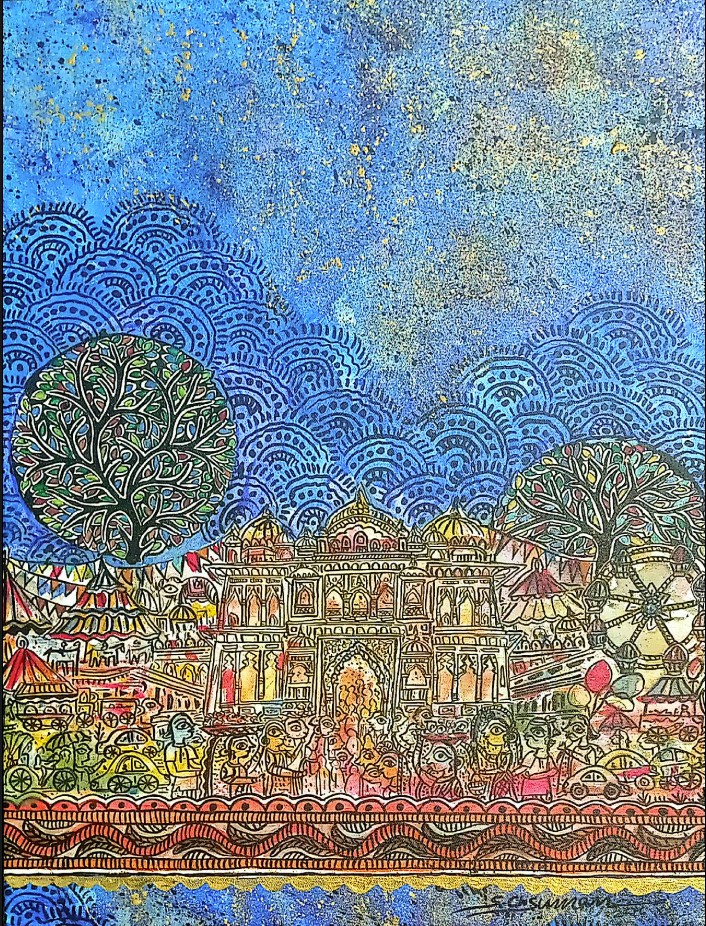
Janakpur: A Living Harmony of Culture, Nature, and Sustainable Vision
This magnificent artwork by Mithila artist S. C. Suman powerfully portrays the timeless cultural soul of Janakpur through the vibrant language of Mithila painting. At the heart of the composition stands the sacred Janaki Temple, symbolizing the glorious heritage of Mithila civilization. Surrounding it are festive fairs, joyous gatherings, colorful swings, traditional rickshaws, music, children’s laughter, blooming lotus ponds, birds, trees, and harmonious human participation — all reflecting the living rhythm of community life.
The painting beautifully embodies the spirit of the United Nations Sustainable Development Goals by emphasizing cultural preservation, ecological balance, clean water, sustainable cities, social harmony, and collective prosperity. Suman’s signature trees, deep blue skies, and symbolic Mithila motifs create a profound dialogue between tradition and modernity. More than a painting, this work is a passionate artistic appeal to recognize Janakpur and the Janaki Temple as a global cultural heritage of humanity.
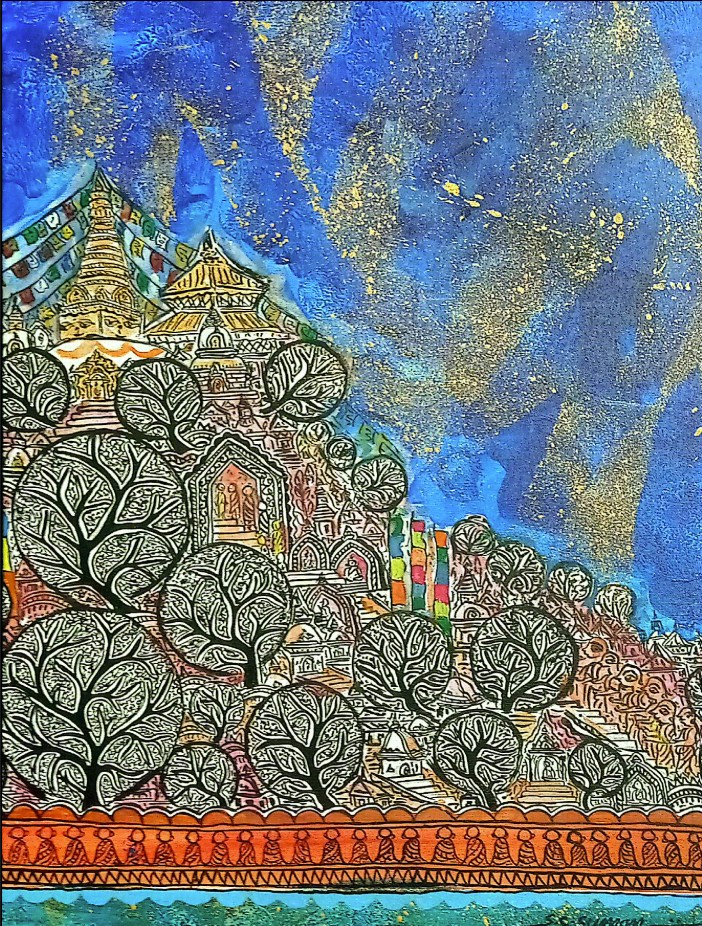
Journey of World Peace: From Swayambhunath to Sustainable Future
Created in the intricate Kachni style of Mithila art, this powerful painting by SC Suman beautifully embodies the spirit of the United Nations Sustainable Development Goals (SDGs). At its heart stands Swayambhunath, the timeless symbol of spiritual awakening, rising gracefully amidst dense forests, sacred waters, and vibrant Buddhist prayer flags. The compassionate eyes of Gautama Buddha gaze upon humanity, radiating a universal message of peace, harmony, and a world beyond war. Through flourishing trees, flowing water, disciplined monks, and harmonious rural life, the artist masterfully portrays ecological balance, cultural continuity, equality, and sustainable coexistence. The deep blue sky and symbolic traditional borders enrich the visual rhythm of Mithila aesthetics. This artwork is not merely a painting, but a profound cultural invocation for global peace, environmental consciousness, and collective human prosperity in the modern world.
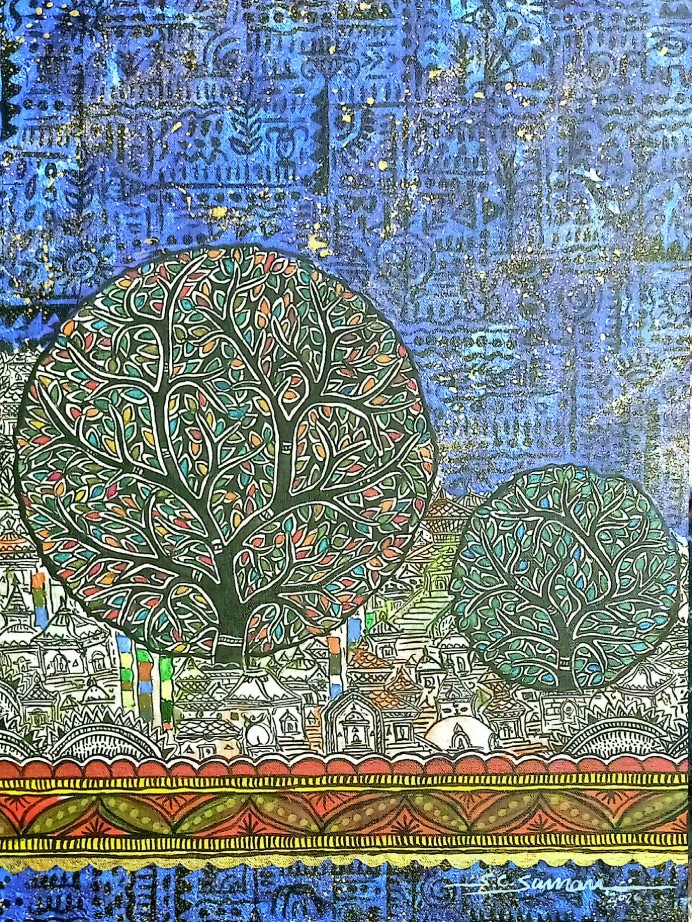
Sustainable Harmony: The Soul of Mithila in Global Vision
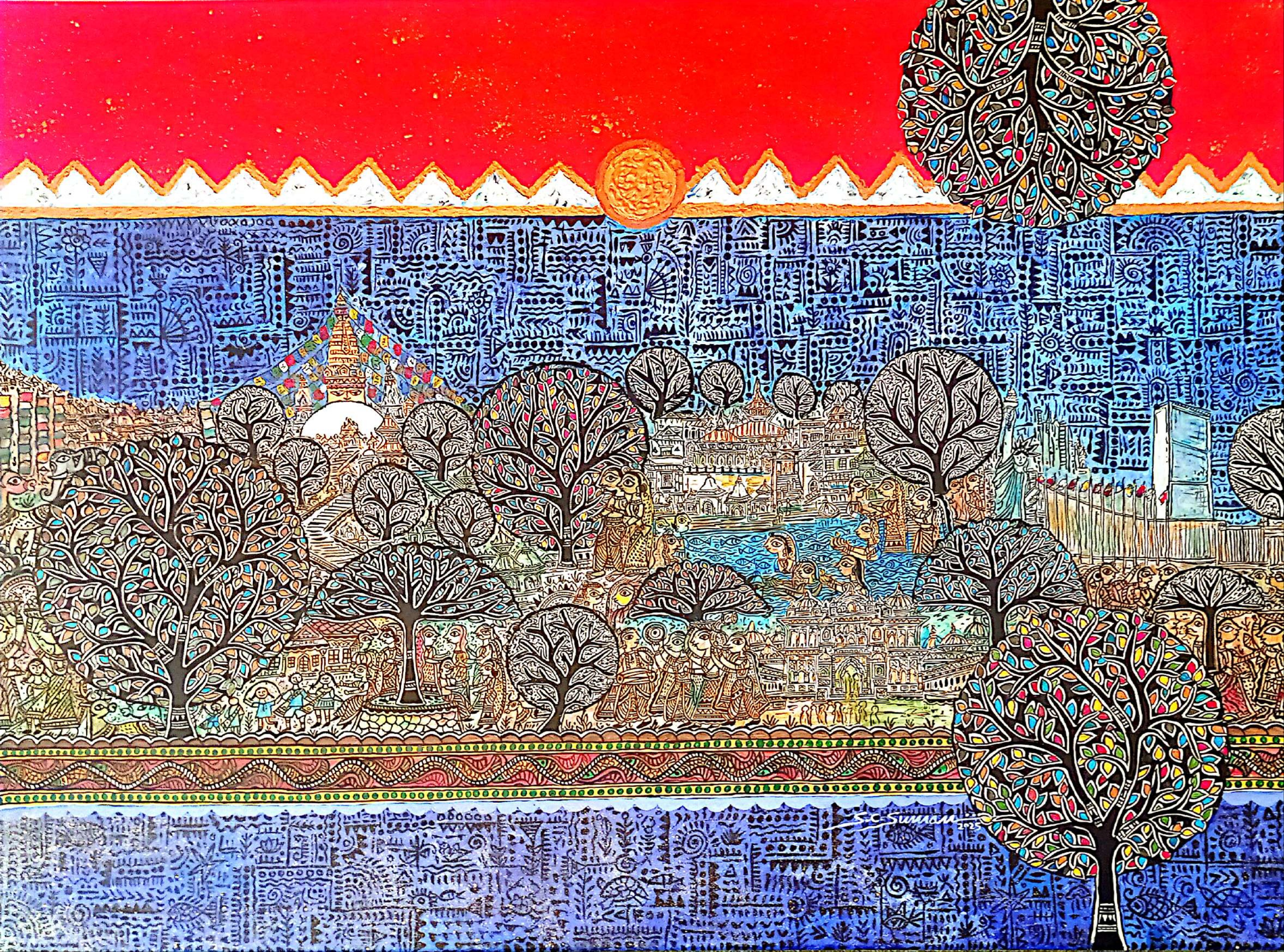
This remarkable painting by SC Suman beautifully embodies the spirit of the United Nations Sustainable Development Goals (SDGs) through the rich visual language of Mithila art. Executed in the intricate Kachni & Varni style, the artwork portrays the harmonious coexistence of tradition and modernity within the villages and cities of Mithila. Towering sacred trees, symbolic Brahmasthan, vibrant flora, serene water bodies, and densely woven cultural motifs reflect sustainable communities, environmental conservation, social unity, and peaceful coexistence.
The deep blue sky symbolizes hope, infinity, and universal peace, while the colorful leaves and traditional borders celebrate biodiversity and cultural heritage. The painting powerfully conveys themes of clean water, climate action, responsible living, and collective harmony among diverse communities. Through expressive lines and radiant colors, Suman transforms Mithila’s everyday landscape into a universal message of ecological balance, human dignity, and global peace for a sustainable future.
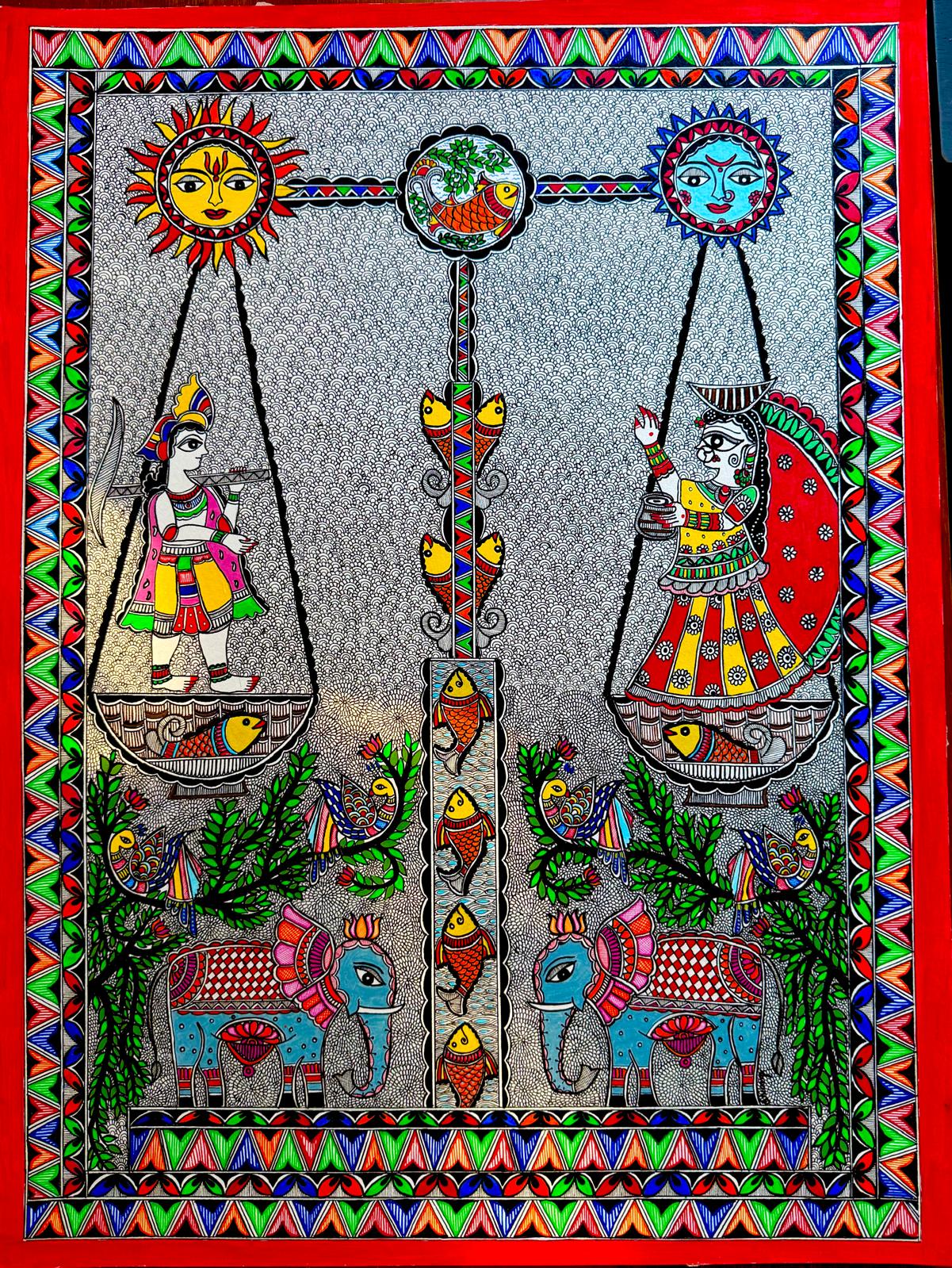
Two Halves, One World
A Mithila style painting using a balance scale to symbolize gender equality,
showing a farmer and a woman in perfect balance, representing equal value of work,
care, and shared contribution in life.
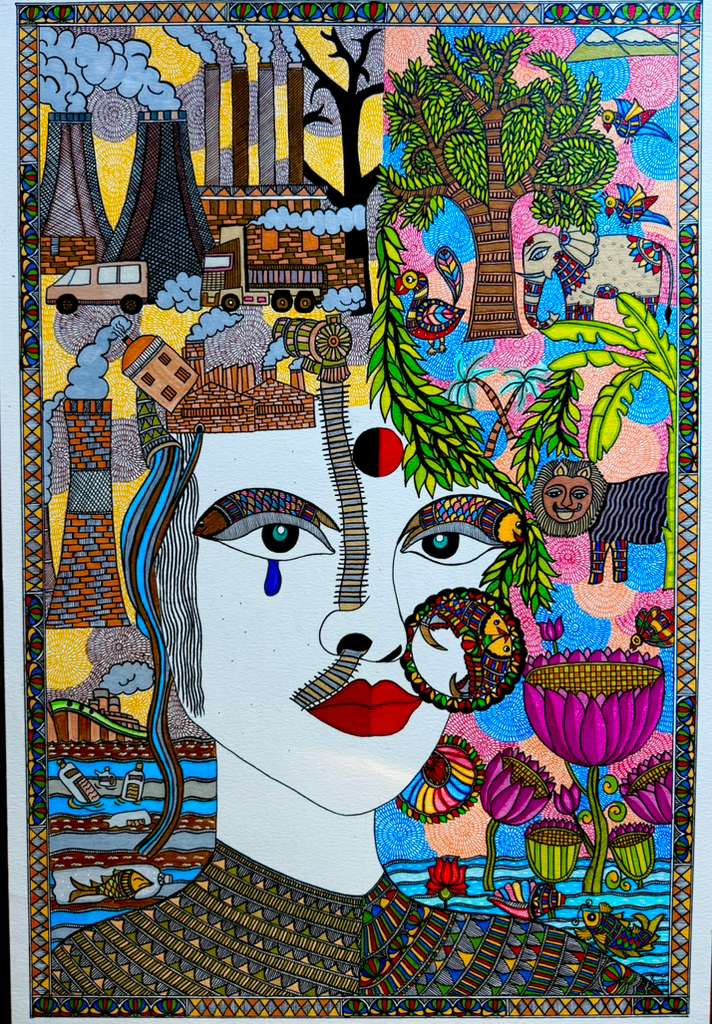
Resonance
A Mithila style split-face composition symbolizing Earth’s environmental
contrast, one side polluted and industrial, the other lush and thriving, highlighting the
impact of human activity and the hope for ecological restoration.
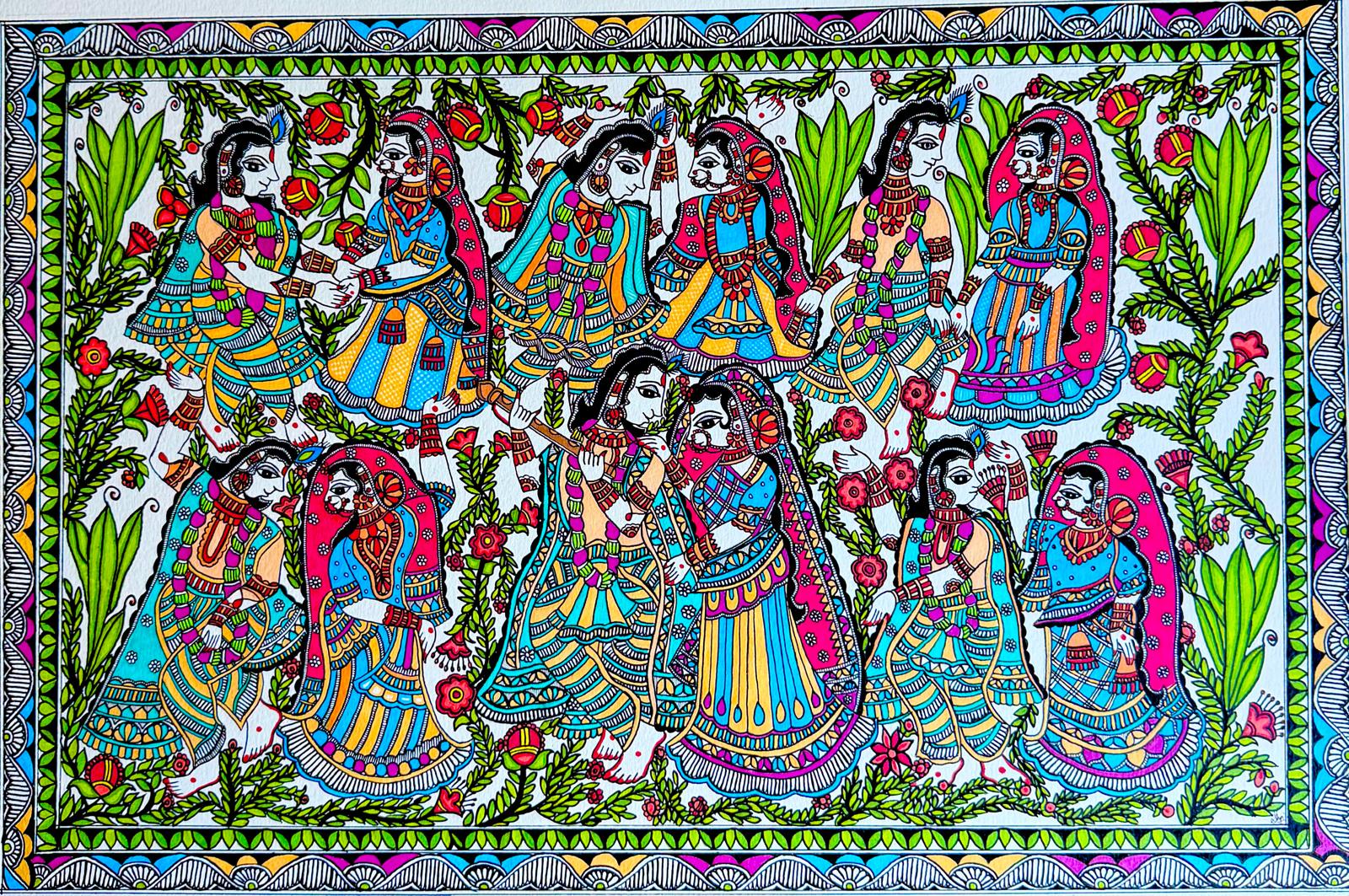
Prem Vatika
A Mithila painting of Krishna’s Raas Leela with gopis in a symbolic forest
garden, expressing divine love, devotion, and unity through vibrant traditional motifs and rhythmic folk patterns.
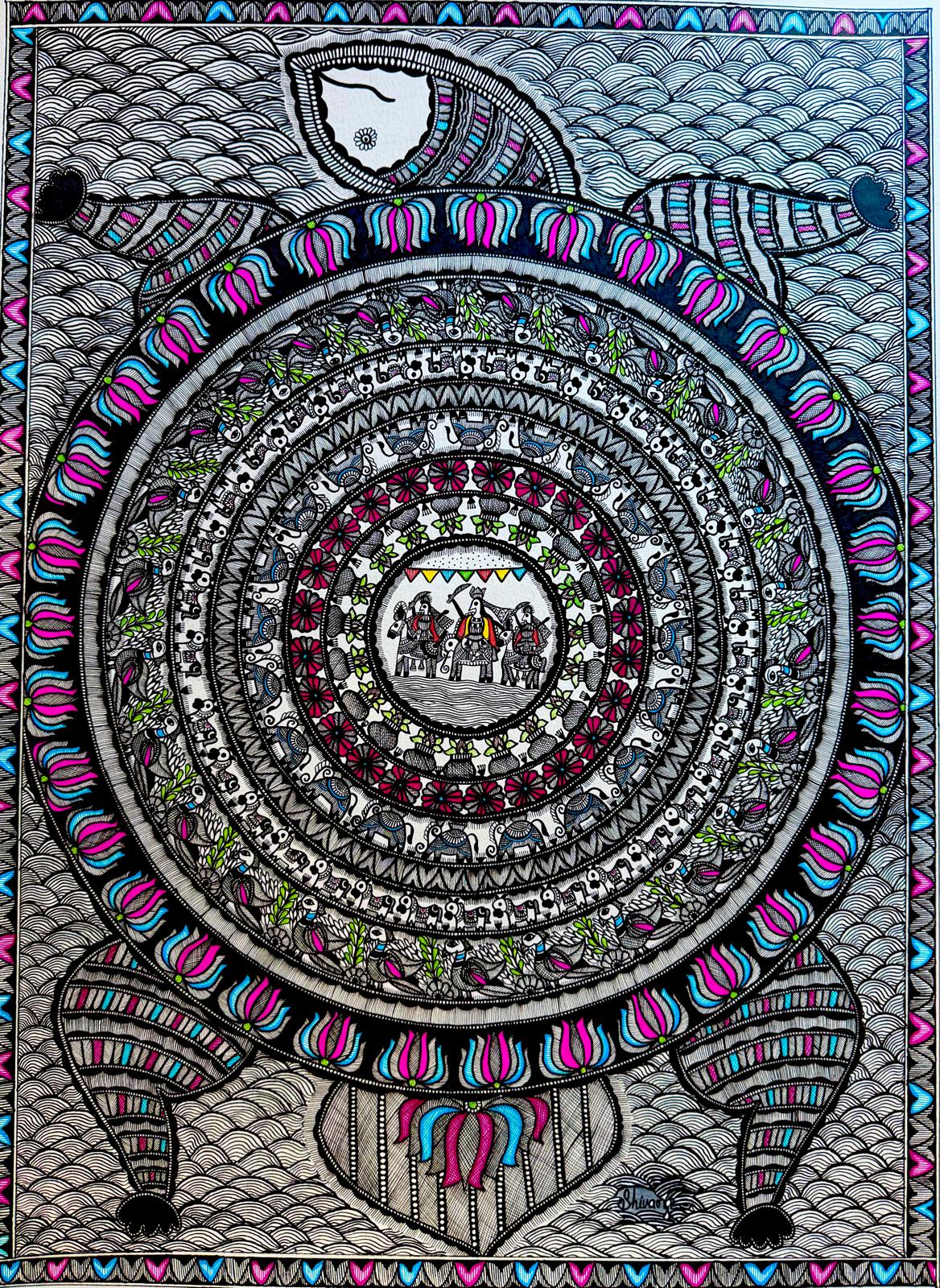
Mythocircle
A Mithila Godna inspired Mithila painting featuring a turtle with mandala-like
circular patterns filled with animal motifs, symbolizing cosmic cycles, mythology, and
interconnected life through the story of Raja Sahlesh.
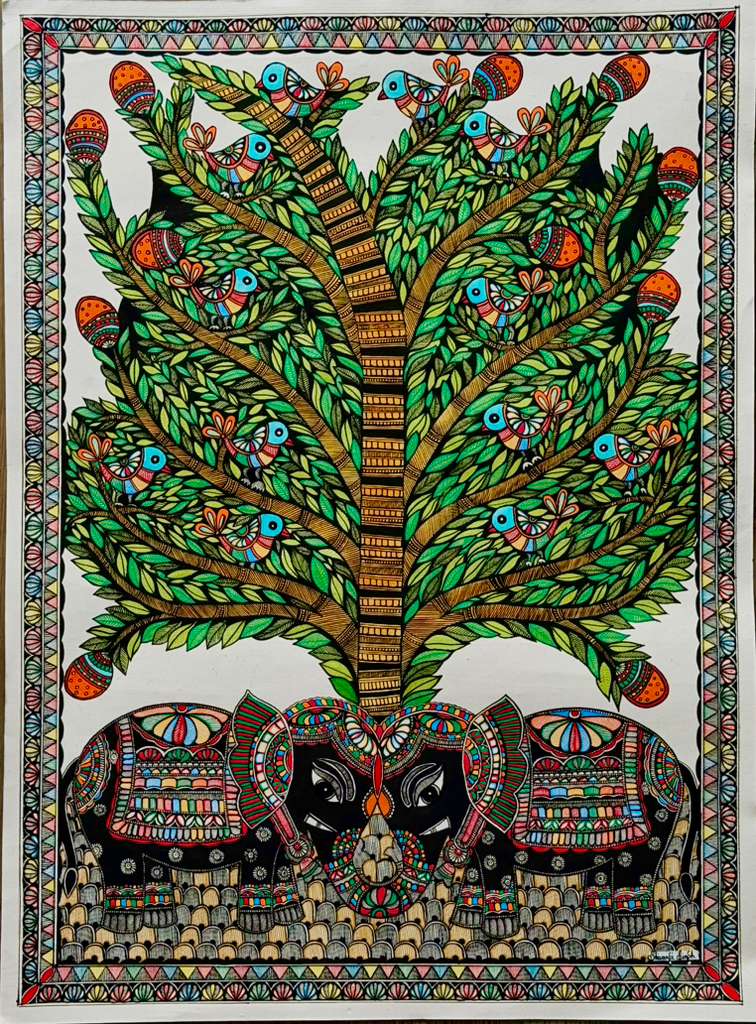
The Invisible Pull
A Mithila style painting showing two elephants beneath a Kadamb tree with
intertwined trunks, symbolizing emotional and spiritual connection, trust, and the unseen
forces that draw beings together.
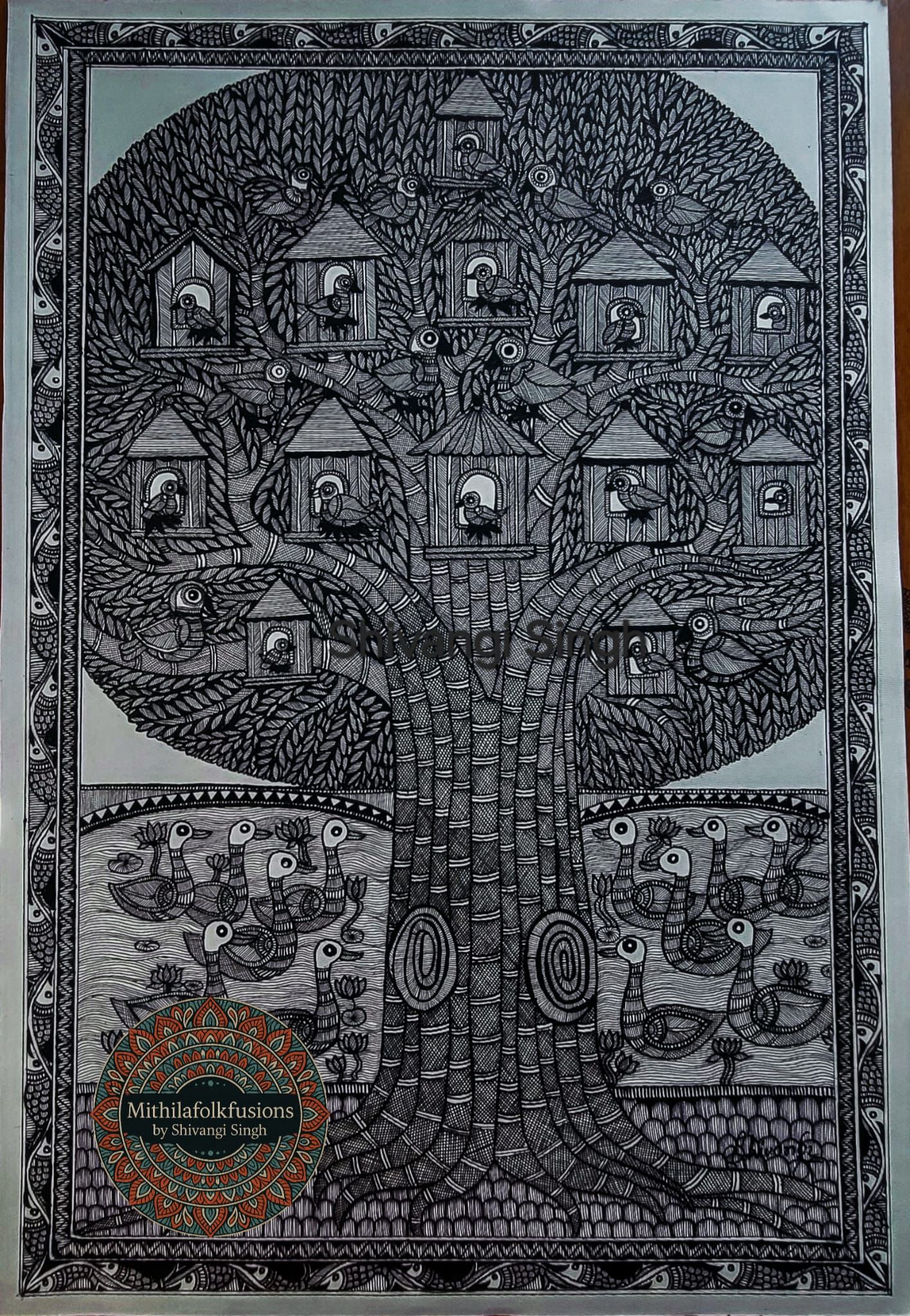
Echoes Beneath the Branches
A black-and-white Mithila painting showing a tree transformed into a
shared home for birds, symbolizing coexistence, belonging, and harmony with nature
through detailed folk patterns.
A Mithila Godna inspired Mithila painting featuring a turtle with mandala-like circular patterns filled with animal motifs, symbolizing cosmic cycles, mythology, and interconnected life through the story of Raja Sahlesh.
A Mithila Godna inspired Mithila painting featuring a turtle with mandala-like
circular patterns filled with animal motifs, symbolizing cosmic cycles, mythology, and
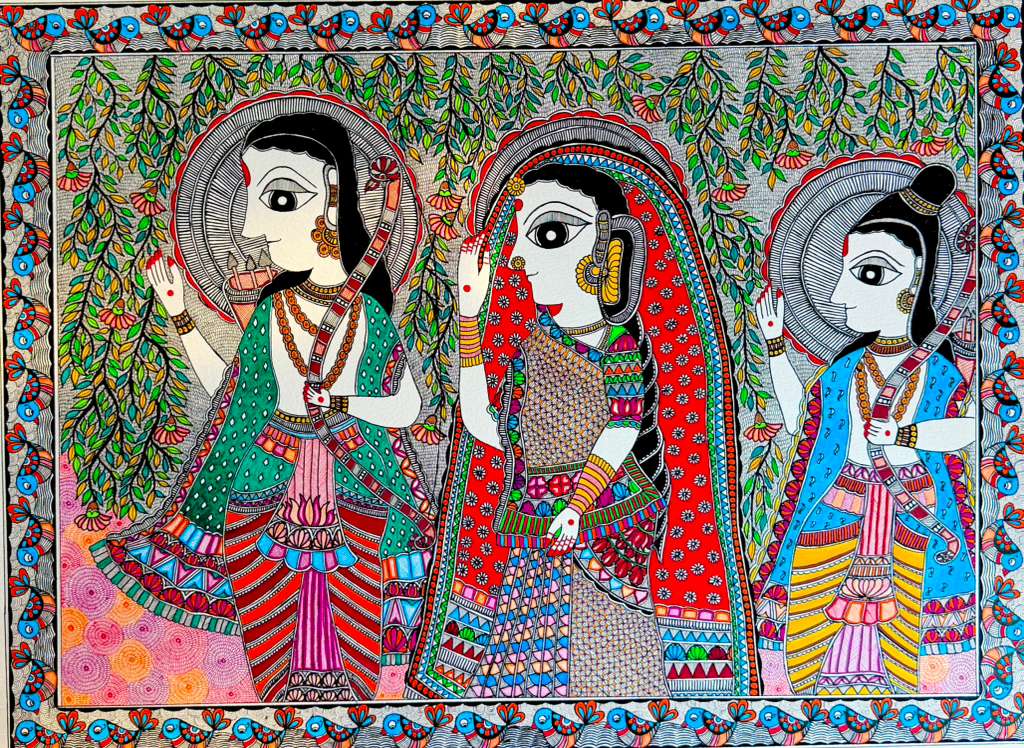
A Mithila-style painting depicting Ram, Sita, and Lakshman’s exile from the Ramayana, symbolizing duty, devotion, and dharma through a vibrant forest setting
and traditional folk motifs.
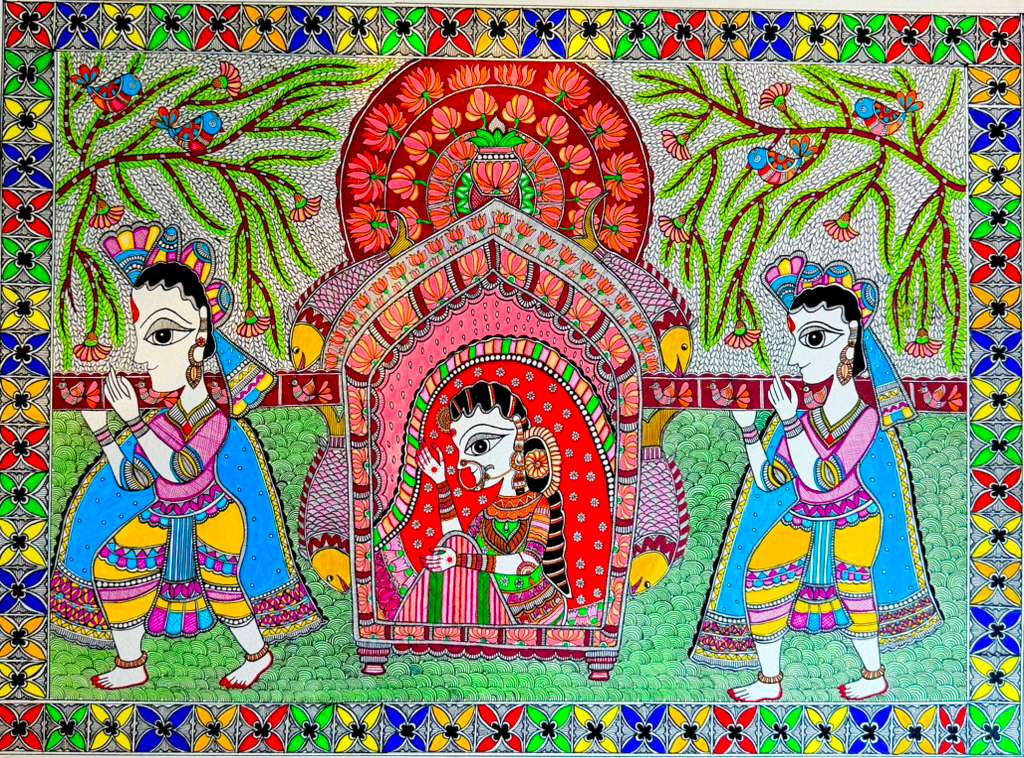
Aarambh
A Mithila painting of the traditional Doli Kahaar scene showing a bride’s
journey to her new home. It symbolizes transition, new beginnings, and cultural ritual
through rich motifs of nature, harmony, and auspicious symbols.
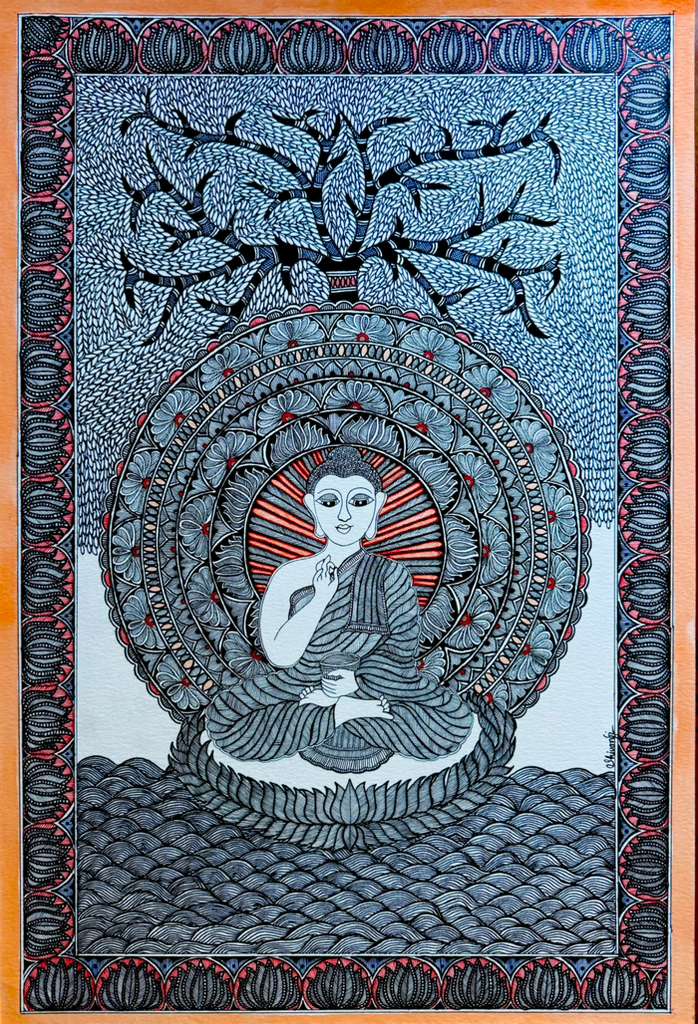
Bodhi Udaya
A Mithila-style painting of Buddha’s enlightenment beneath the Bodhi tree, symbolizing wisdom, peace, and spiritual awakening through intricate folk motifs and meditative composition.
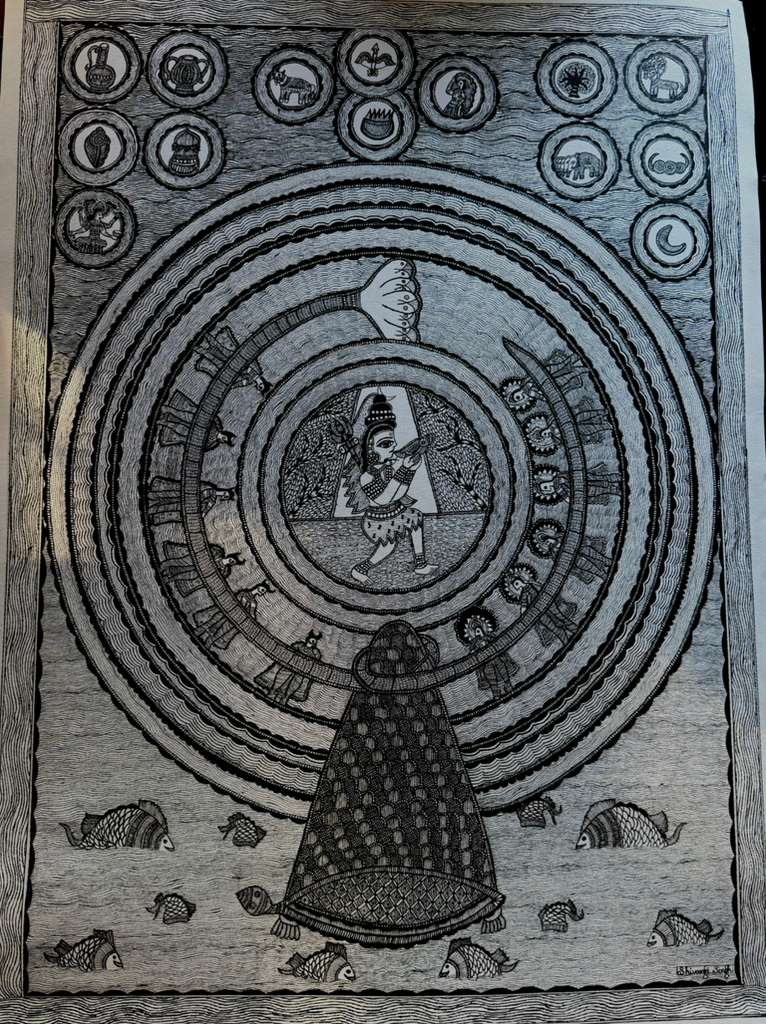
Manthan
A Mithila style painting showing two elephants beneath a Kadamb tree with
intertwined trunks, symbolizing emotional and spiritual connection, trust, and the unseen
forces that draw beings together.
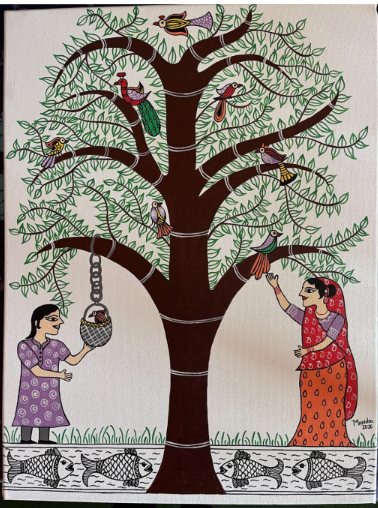
Tree of Life
This artwork is a vibrant painting that
beautifully celebrates the harmonious
relationship between humans, nature, and
wildlife. The composition revolves around a
majestic tree filled with birds, while the male
and female interact with the natural world
around them, creating a narrative of care,
coexistence, and ecological balance. There is
a bond suggesting trust and communication
between humans and nature.
Along the bottom border, a row of fish swims
through flowing water, introducing another
element of life and reinforcing the
interconnectedness of land, water, animals,
and people.
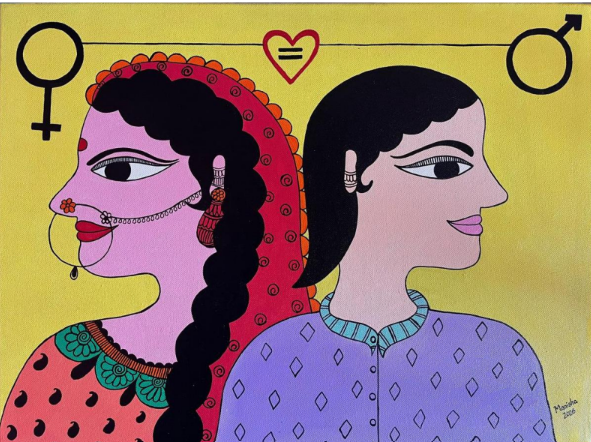
Gender Equality and Mutual Respect
This artwork is a contemporary Mithila-style
painting that symbolizes gender equality and
mutual respect. The woman and man are
depicted back-to-back as equals, connected
by a line featuring the female and male
symbols and a heart containing an equals
sign. The composition emphasizes
partnership rather than hierarchy,
celebrating balance, dignity, and shared
responsibility in society. Through bold colors,
simplified forms, and traditional folk-art
aesthetics, the artist conveys a powerful
message of equality, love, and
empowerment.
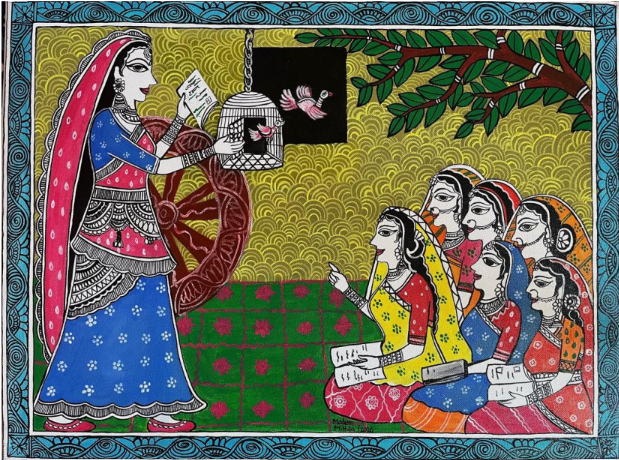
Power Born from Roots
This artwork depicts a woman teaching or
sharing knowledge with a group of women.
She is shown holding a written document
while releasing birds from a cage,
symbolizing education, freedom,
empowerment, and the spread of
knowledge. The traditional folk-art style uses
vibrant colors and intricate patterns to
celebrate women's learning and liberation.
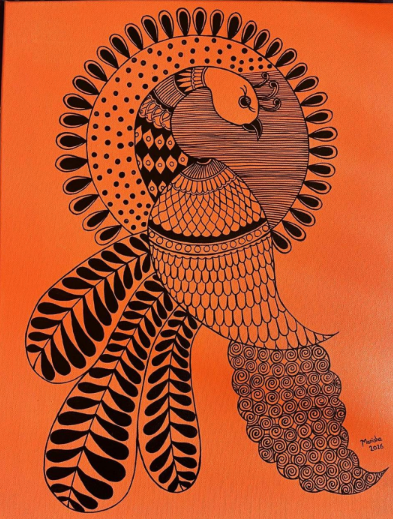
Eternal Flow of Life
This artwork reimagines the traditional
visual language of Mithila art through a
contemporary aesthetic. The stylized bird,
enriched with rhythmic patterns and
symbolic motifs, celebrates the
interconnectedness of nature, spirituality,
and cultural heritage. The bold contrast of
black against orange transforms a familiar
folk subject into a striking modern
expression, demonstrating how traditional
art forms continue to evolve while preserving
their cultural essence.”
The painting successfully blends traditional
Mithila motifs with a modern minimalist
palette, creating a work that is both rooted
in heritage and visually contemporary.
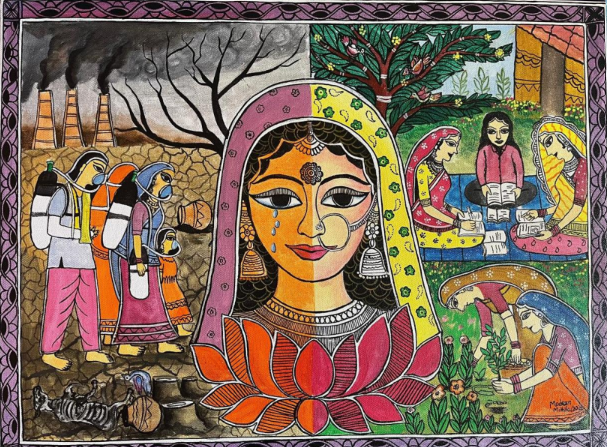
Sustainable and Better Future
This painting contrasts environmental
destruction with hope and empowerment.
The left side shows pollution, drought, and
human suffering, while the right side
portrays women engaged in education,
farming, and community activities. The
central female figure emerging from a lotus
symbolizes strength, resilience,
environmental awareness, and social
progress. The artwork highlights the role of
women in creating a more sustainable
future.
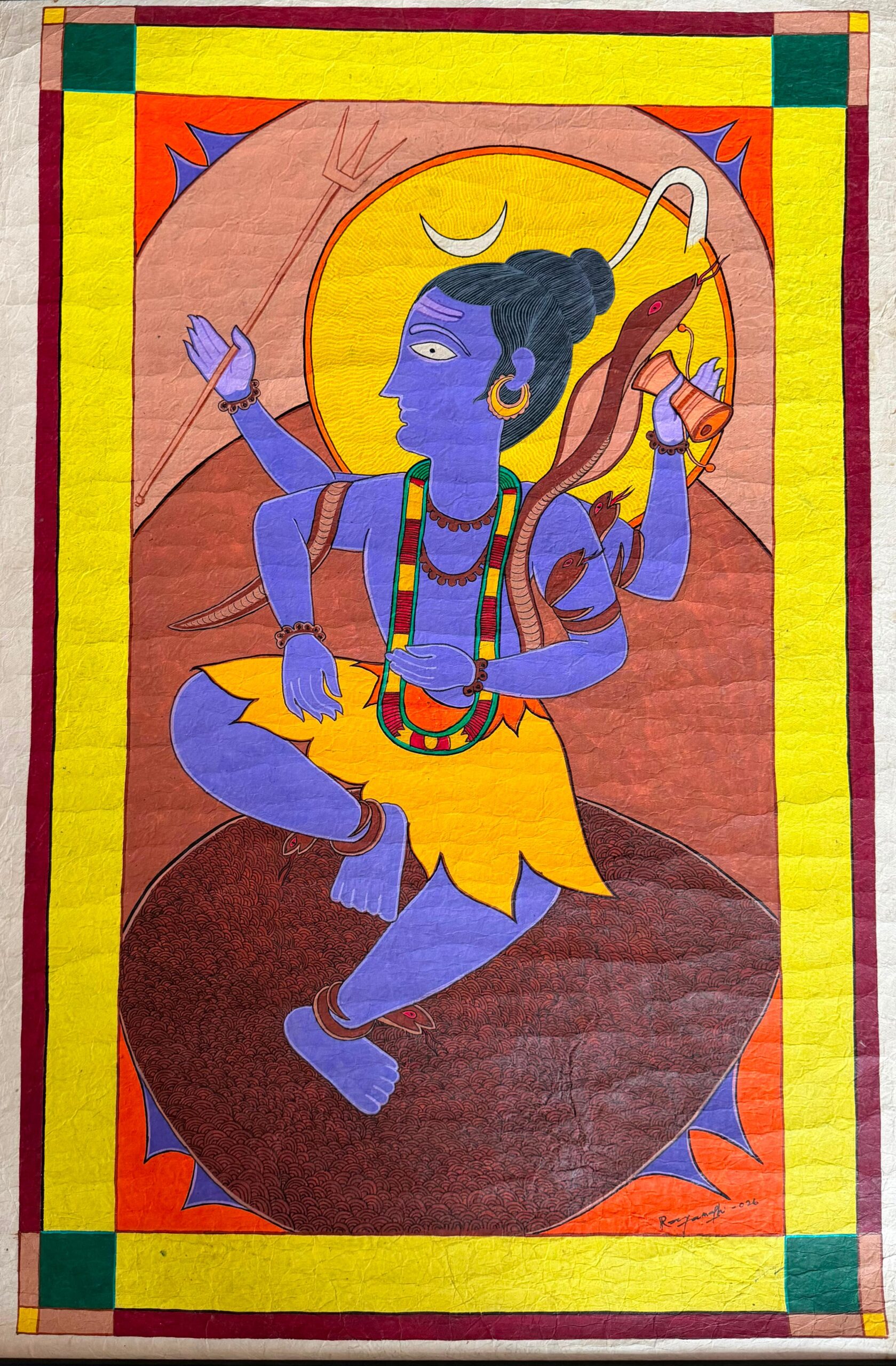
Tandav
Created in the Kaushiki style of Mithila painting, Tandav portrays Lord
Shiva in his cosmic dance, symbolizing creation, preservation, and transformation.
Through vibrant colors and expressive forms, the artwork captures Shiva’s divine energy while blending traditional Mithila aesthetics with a contemporary visual approach.
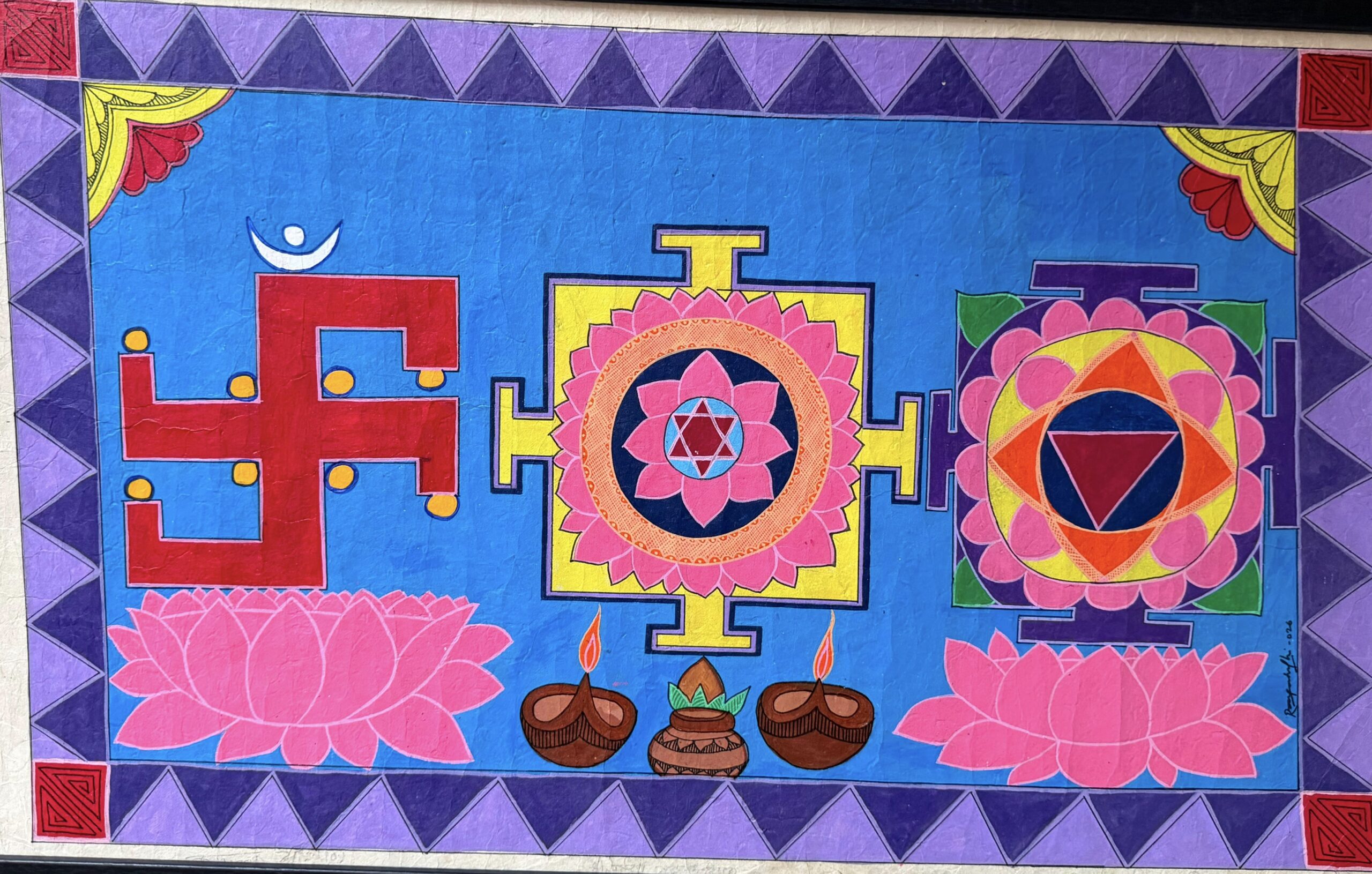
Kamal Aripan
A Kaushiki-style Mithila painting inspired by Aripan designs, centered on
the lotus symbol of purity and spirituality, expressed through bold colors and modern
Form.
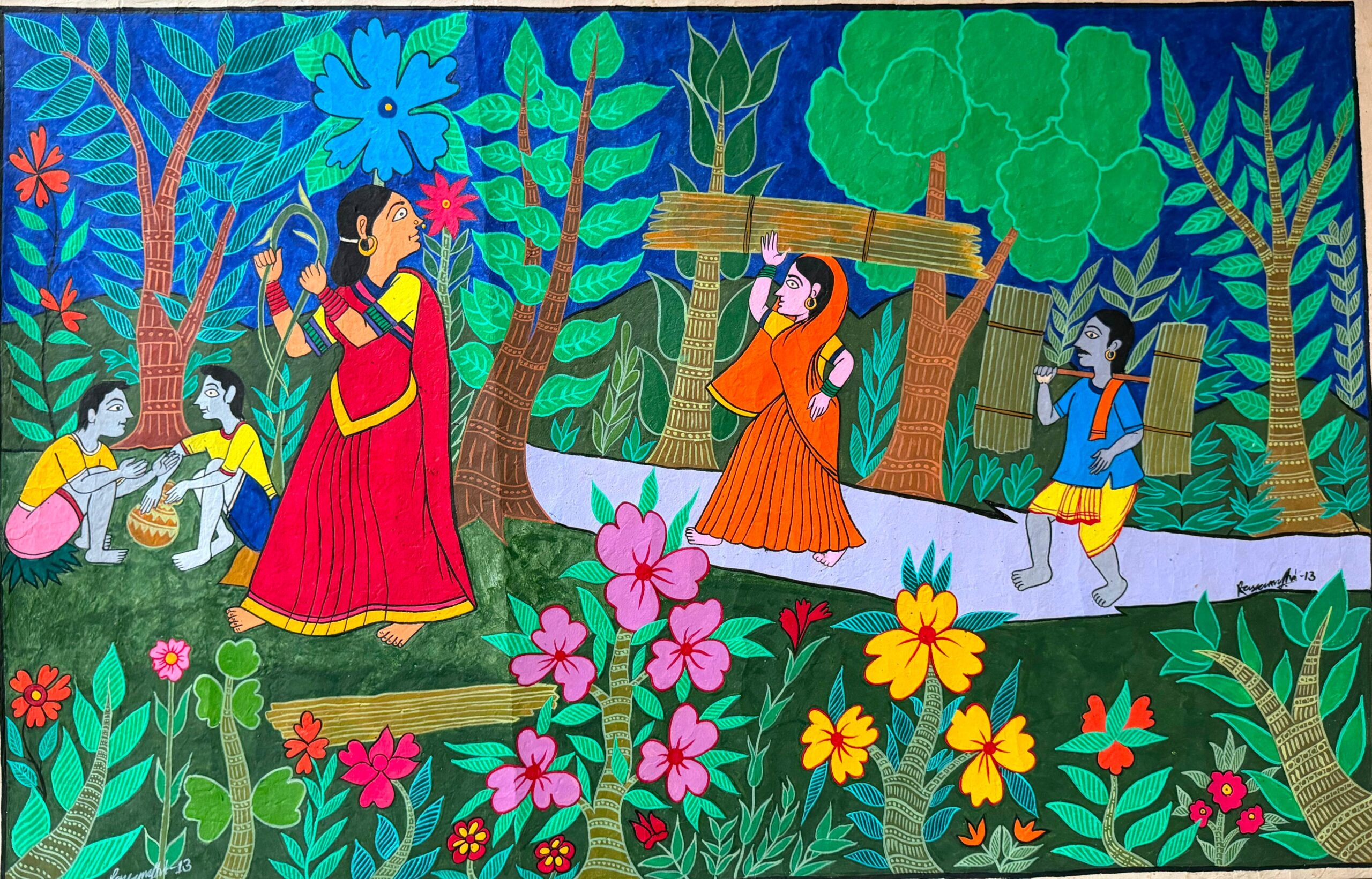
Daily Life of Woodcutter
A Kaushiki-style Mithila painting depicting a woodcutter’s simple rural life,
highlighting harmony between humans and nature through vibrant colors and
expressive forms without line work.
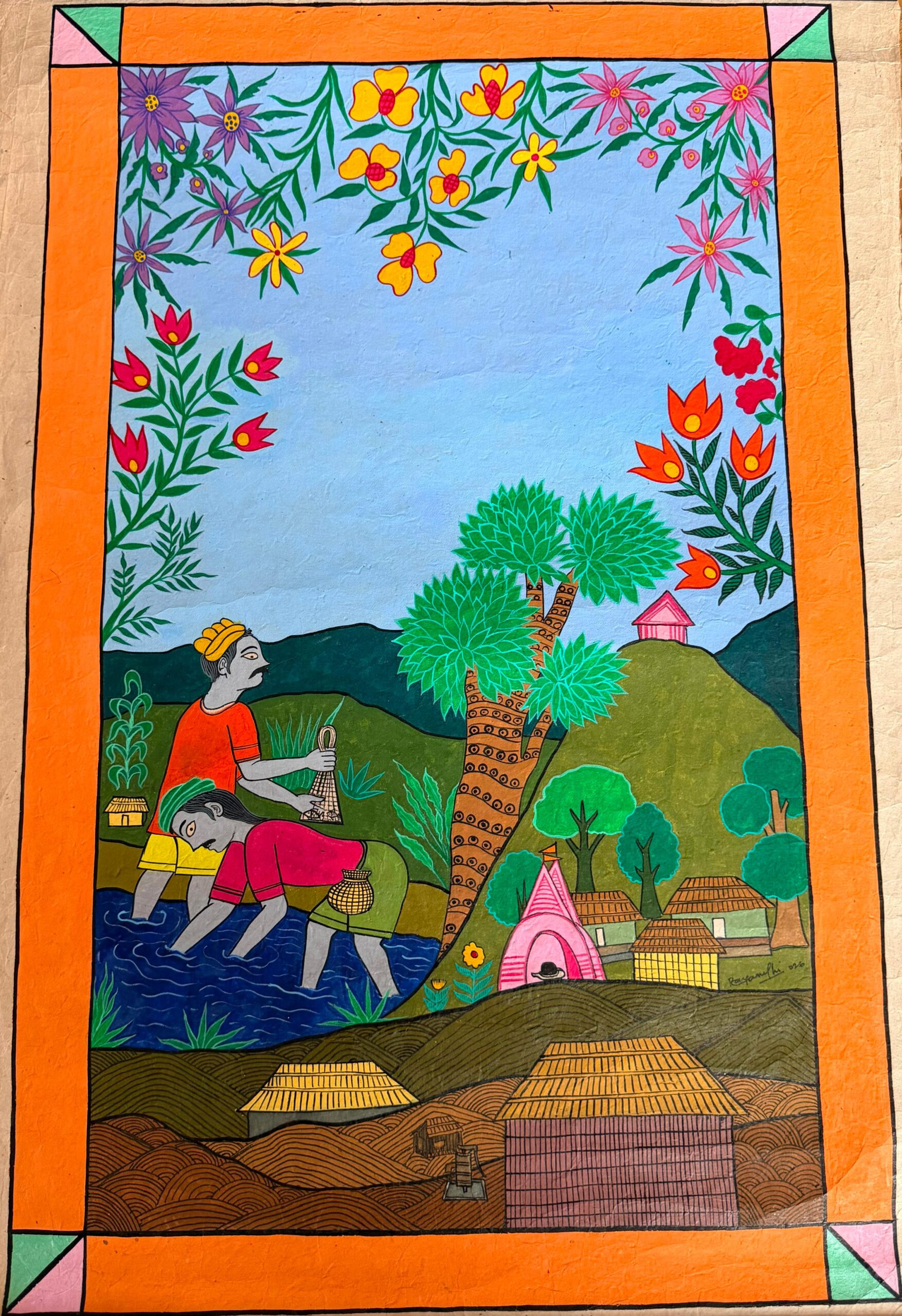
Daily Life of Fisherman
A Kaushiki-style Mithila painting depicting fishermen at a village pond,
highlighting rural simplicity and harmony with nature through vibrant colors and
expressive, line-free forms.
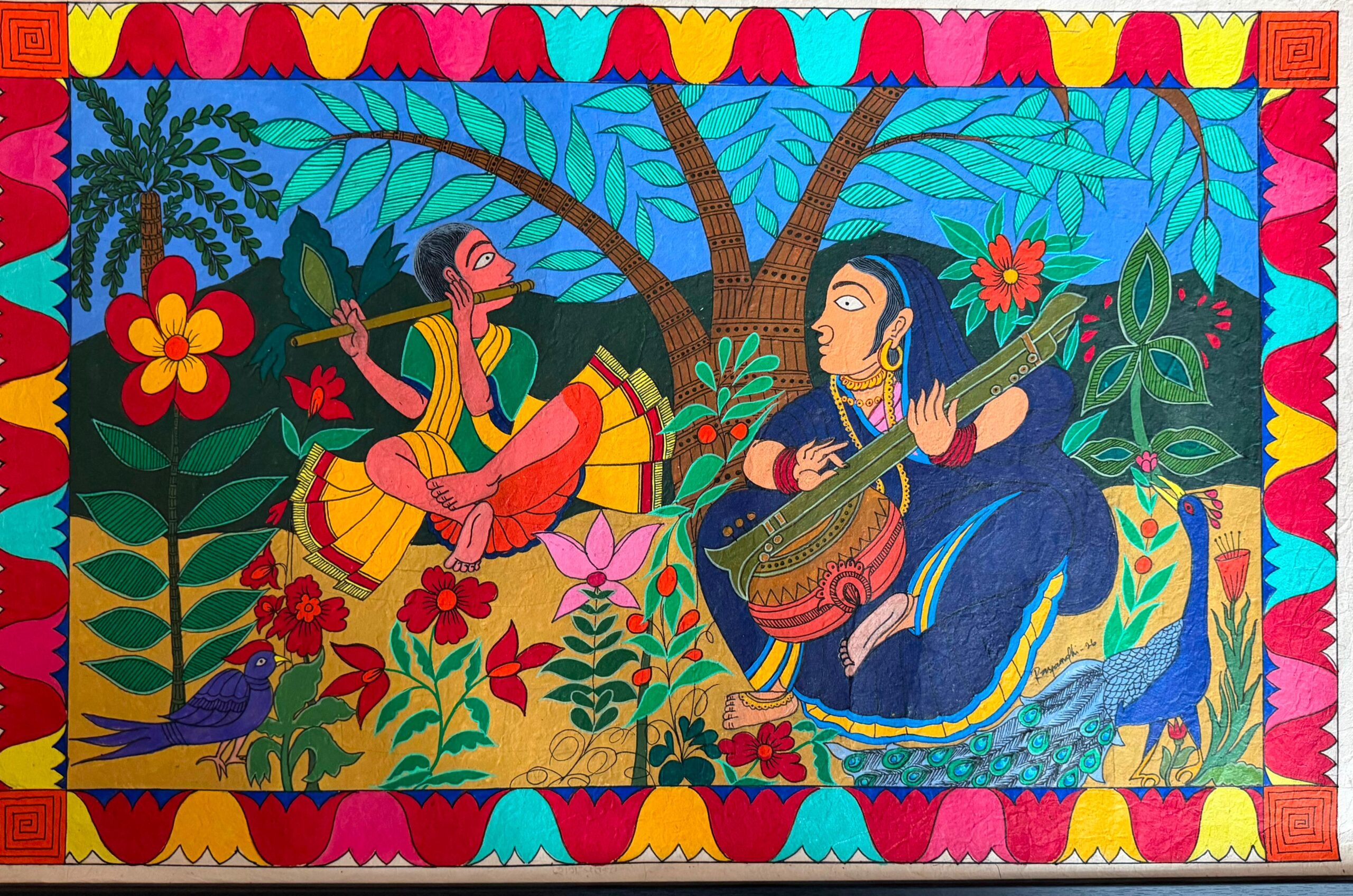
Folk Musicians Playing Their Instruments
A Mithila folk painting showing a male and female musician playing
bansuri and sitar under a tree, symbolizing harmony between music, nature, and rural
cultural traditions.
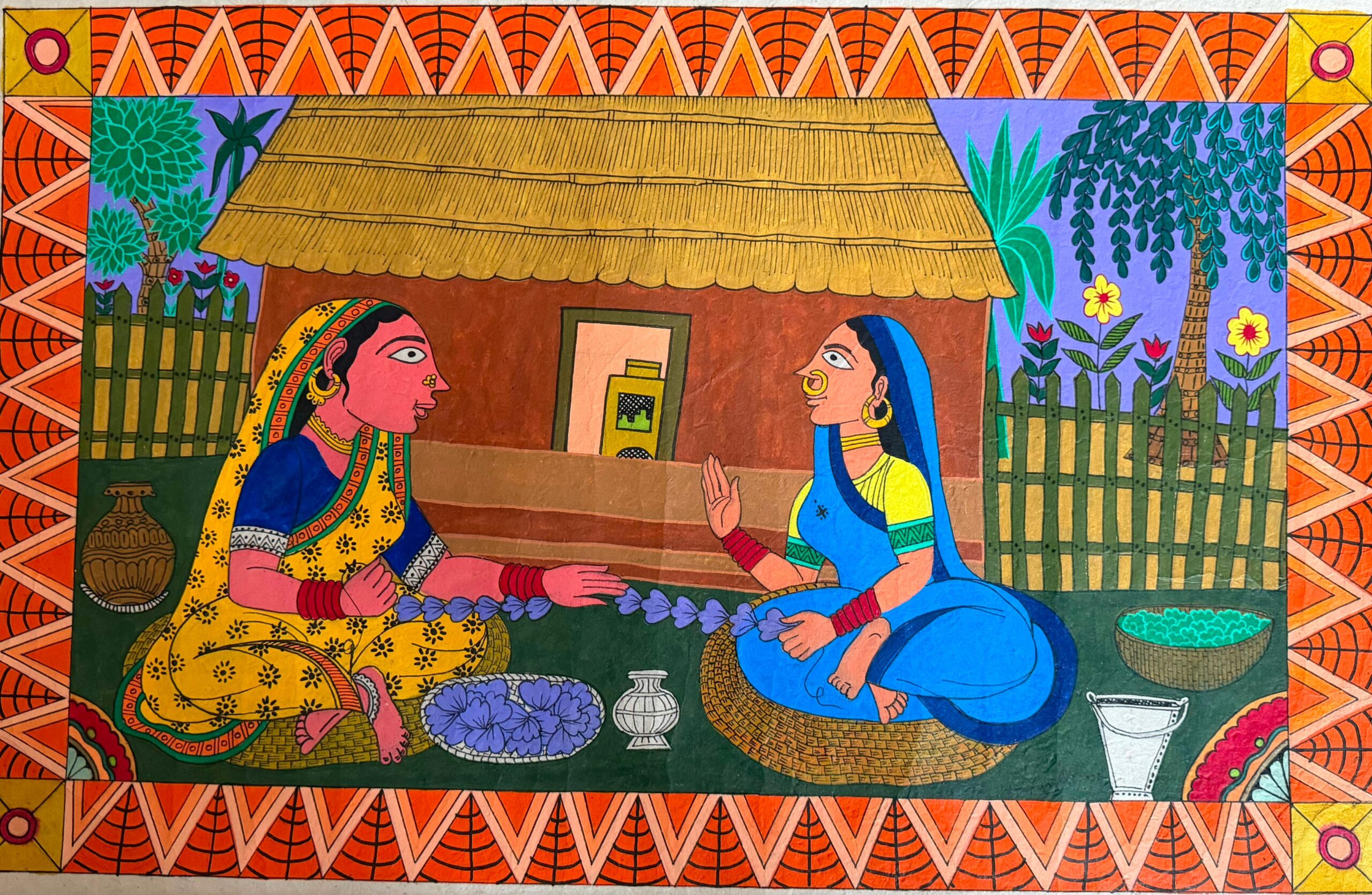
Working Hands Together in a Family Helping Each Other
A Mithila folk painting depicting women working together at home making
flower garlands, symbolizing unity, cooperation, and the dignity of shared family life.
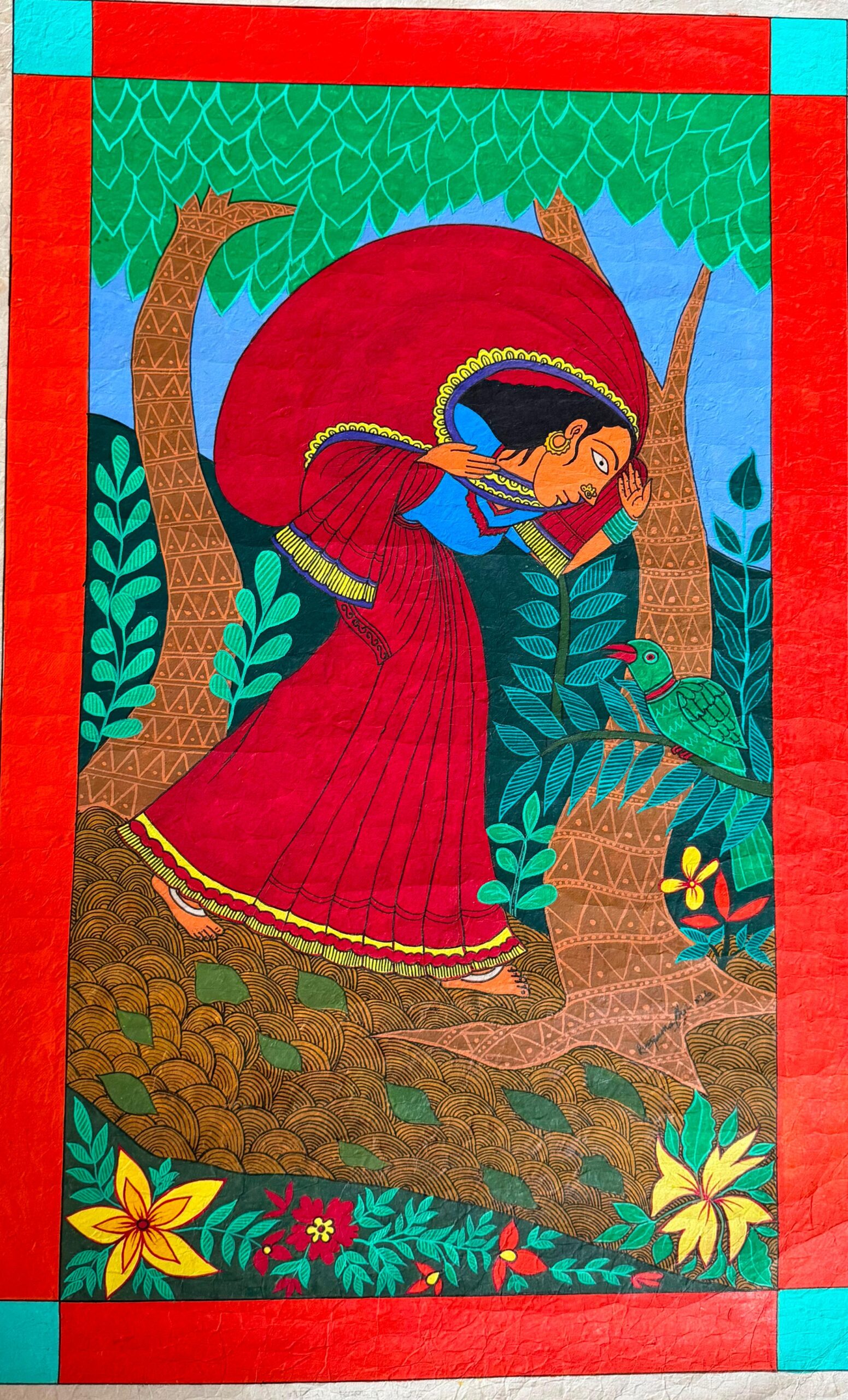
Newly Married Girl on the Way Back to Her Parents’ Home
A Mithila folk painting showing a newly married woman in a red saree
walking through a forest path, symbolizing emotional transition, love, and connection
with nature.
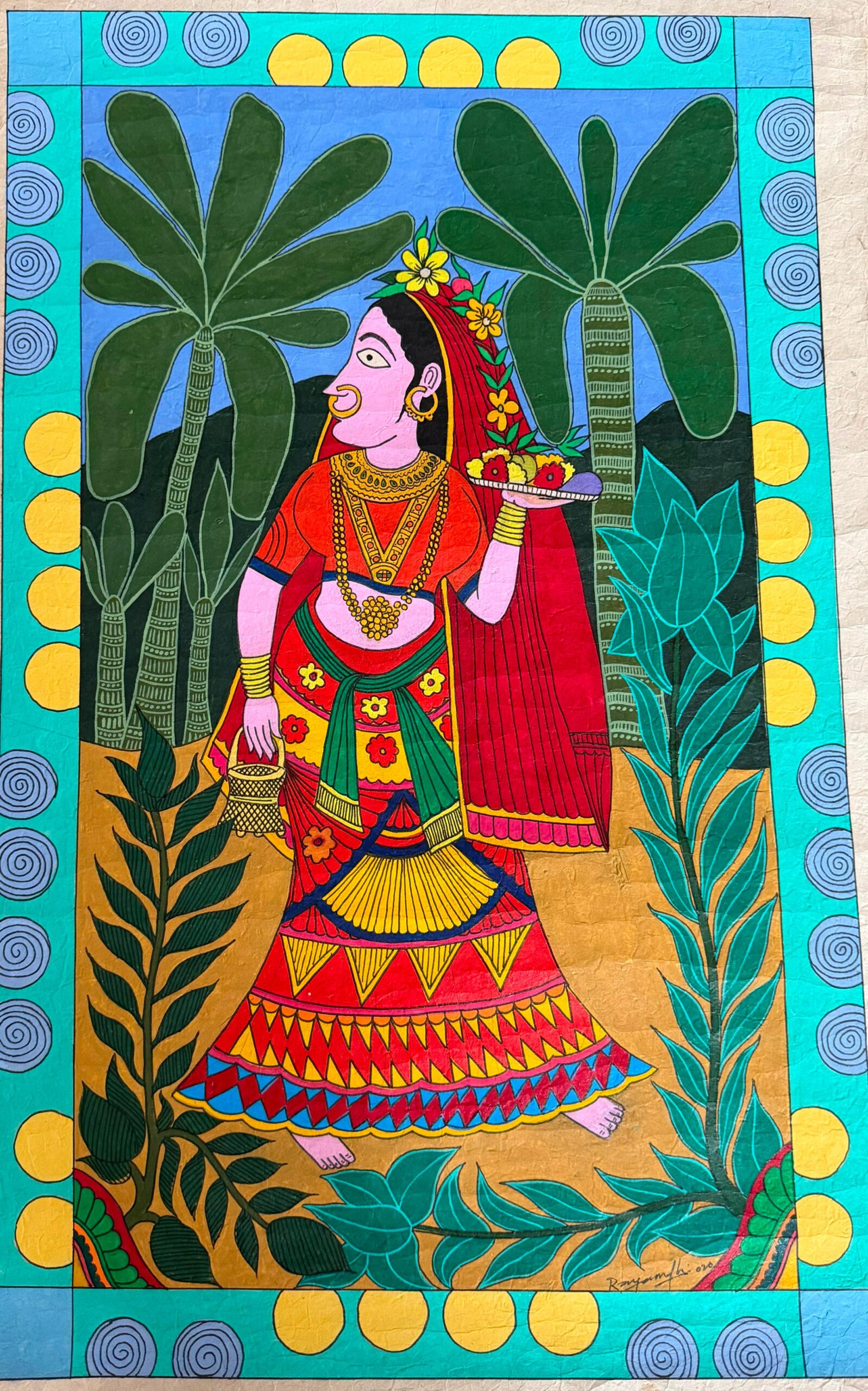
A Lady on the Way to the Temple for Her Worship
A Mithila folk painting showing a woman walking to a temple in devotion,
symbolizing faith, purity, and the spiritual rhythm of rural life.
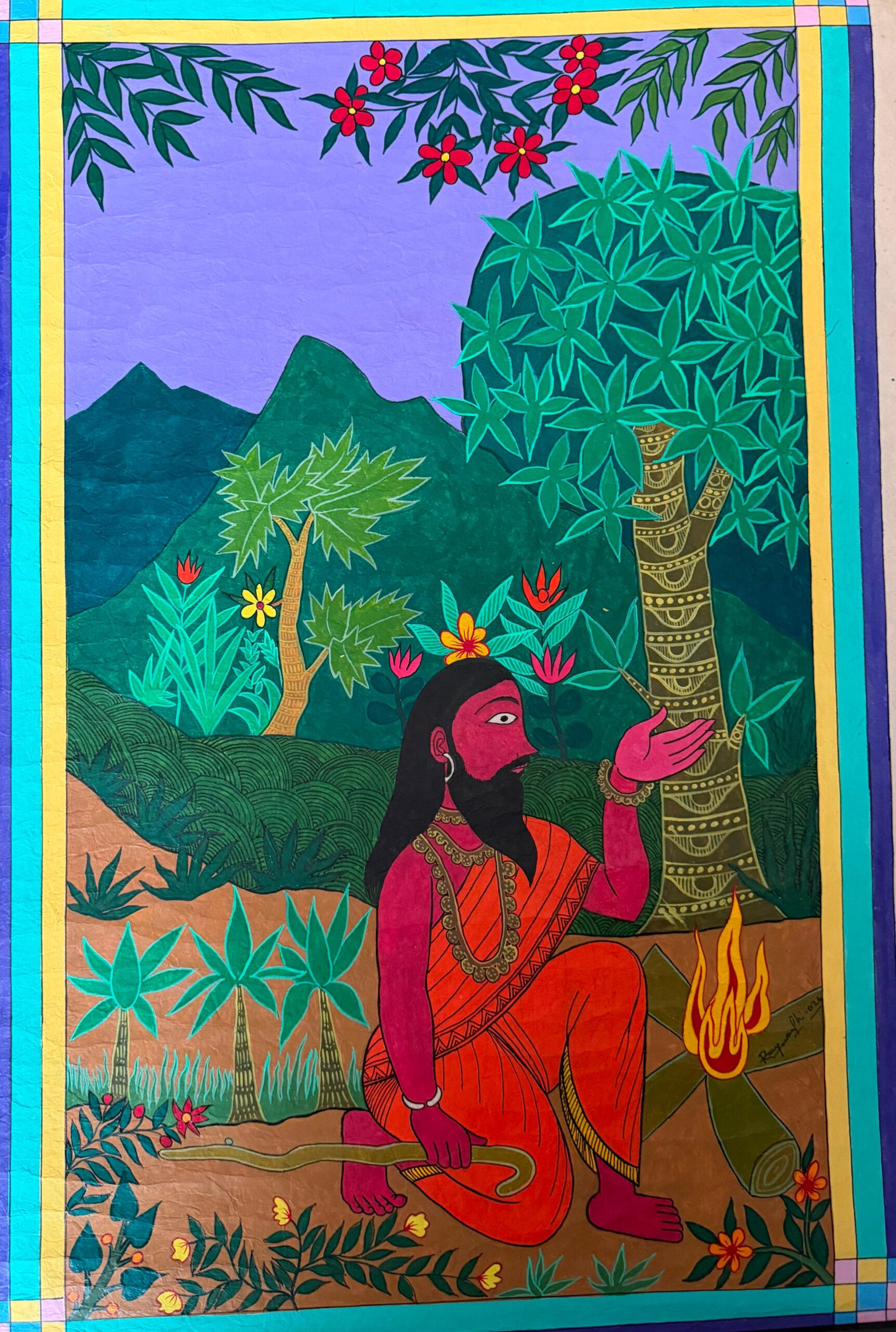
Hindu Saint
A Mithila folk painting depicting a Hindu saint in Bhagwa attire performing
rituals before a sacred fire, symbolizing devotion, discipline, and spiritual awakening in a
natural mountain setting.
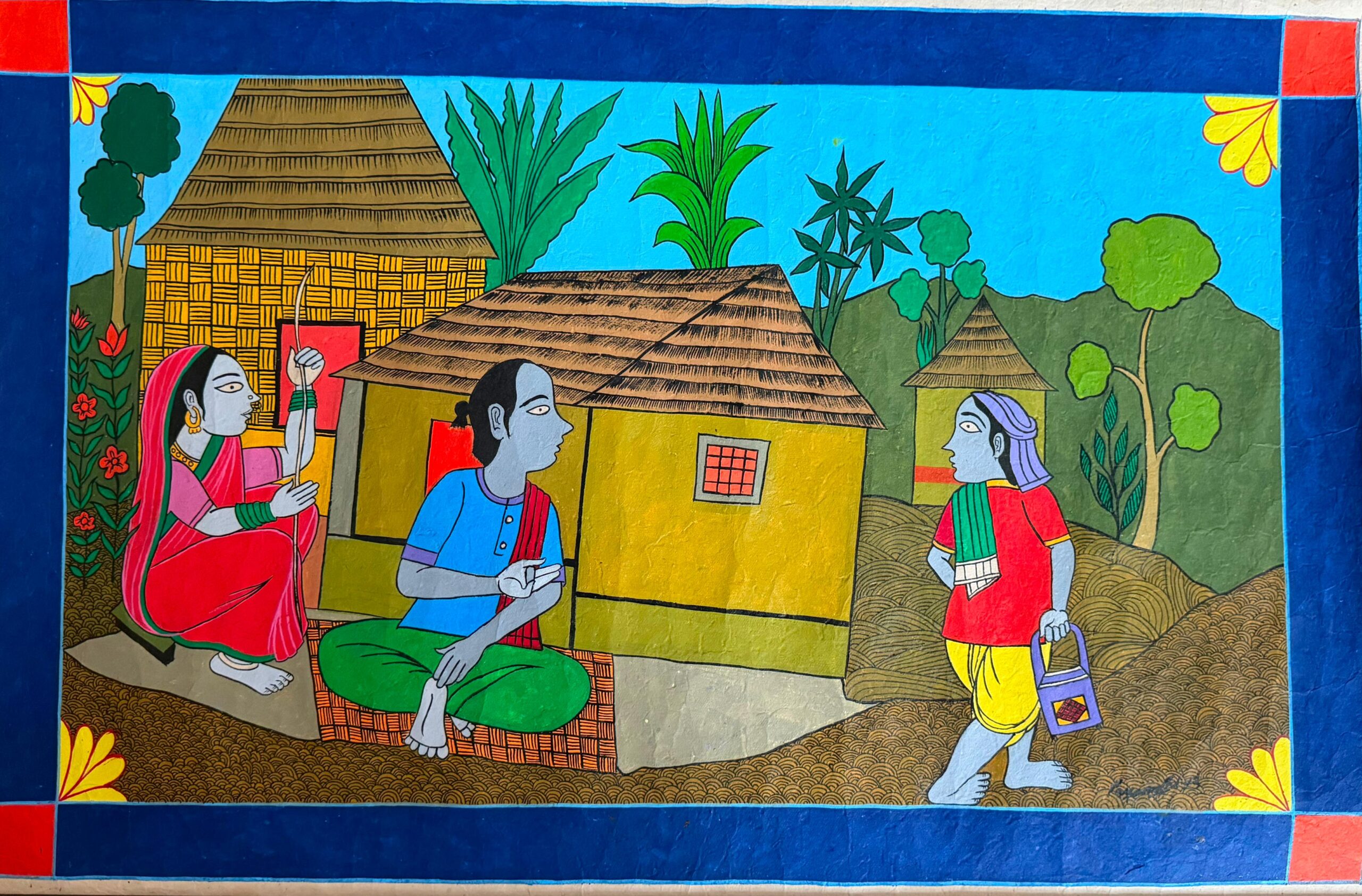
Neighborhood of Village
A Kaushiki-style Mithila painting depicting everyday village life, where men
and women engage in daily chores, symbolizing harmony, community, and cultural
continuity in rural settings.
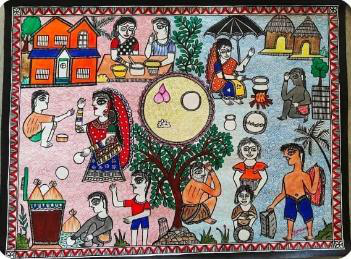
Poverty and Hunger Have Affected Lives
A powerful socio-realistic painting contrasting food waste in wealthy
homes with the struggles of impoverished families. It highlights hunger, inequality, and
survival through symbolic imagery of a globe and basic food essentials.
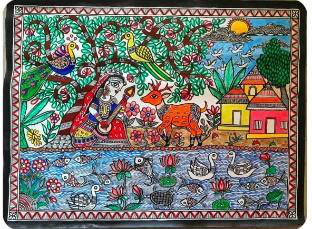
Life Below Water & Life on Land
A vibrant folk-art painting celebrating the interconnectedness of aquatic
and terrestrial life. Through depictions of nature, wildlife, and human communities, the
work highlights the importance of environmental balance and sustainable living.
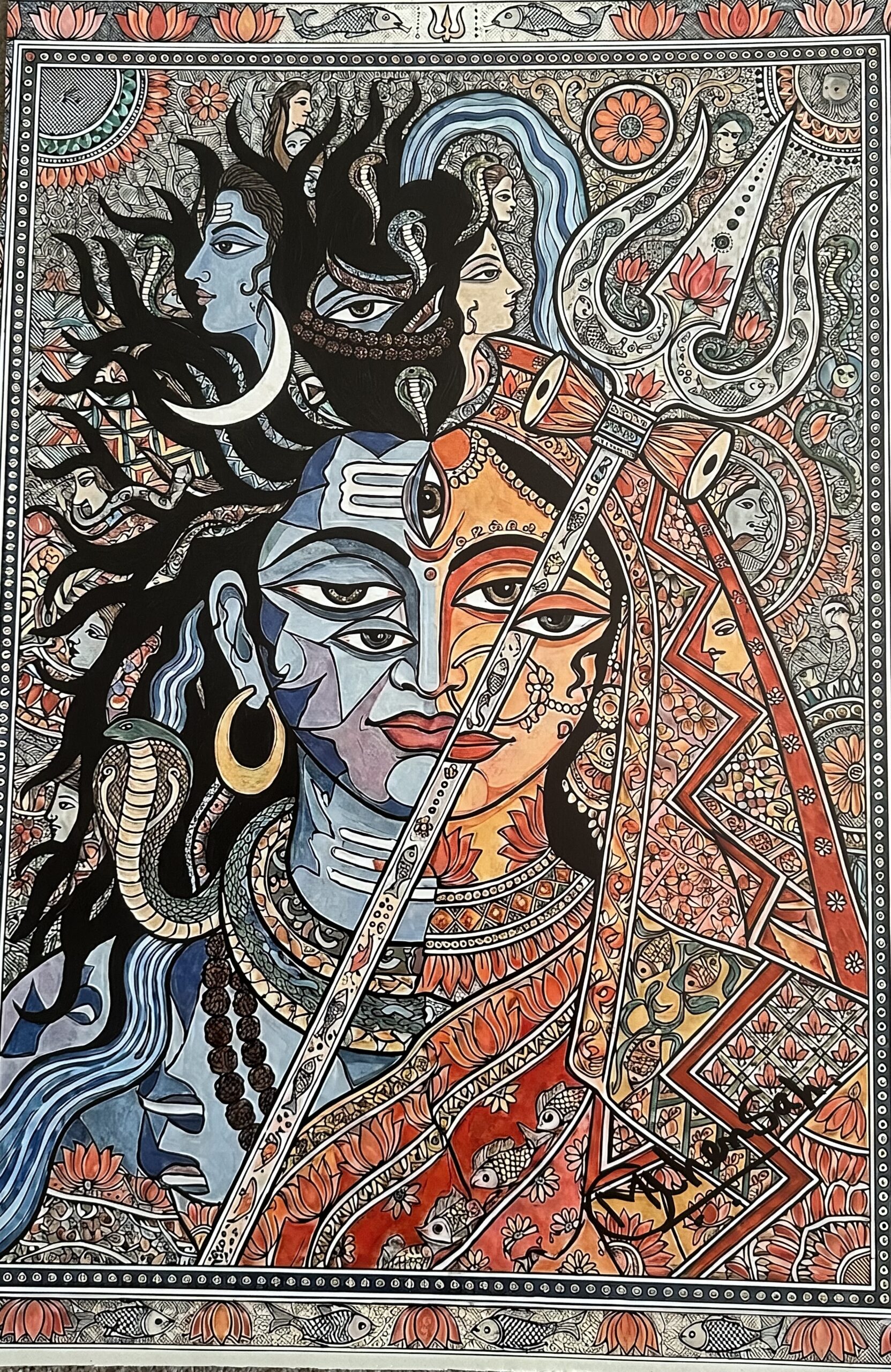
Sacred Union: The Balance of Creation
This intricate Mithila painting portrays Ardhanarishvara, the divine fusion of Shiva and Shakti, symbolizing the inseparable balance of masculine and feminine energies. Through elaborate traditional motifs, sacred geometry, lotus blossoms, serpents, fish, birds, and flowing natural forms, the composition celebrates unity, mutual respect, and the interconnected forces that sustain life and creation.
Aligned with Sustainable Development Goal 5 (Gender Equality), the artwork emphasizes the importance of balance, inclusion, and equal partnership in society. Drawing upon the rich visual language of Mithila art, the painting presents harmony not as sameness, but as the strength that emerges when diverse identities coexist with dignity and purpose.
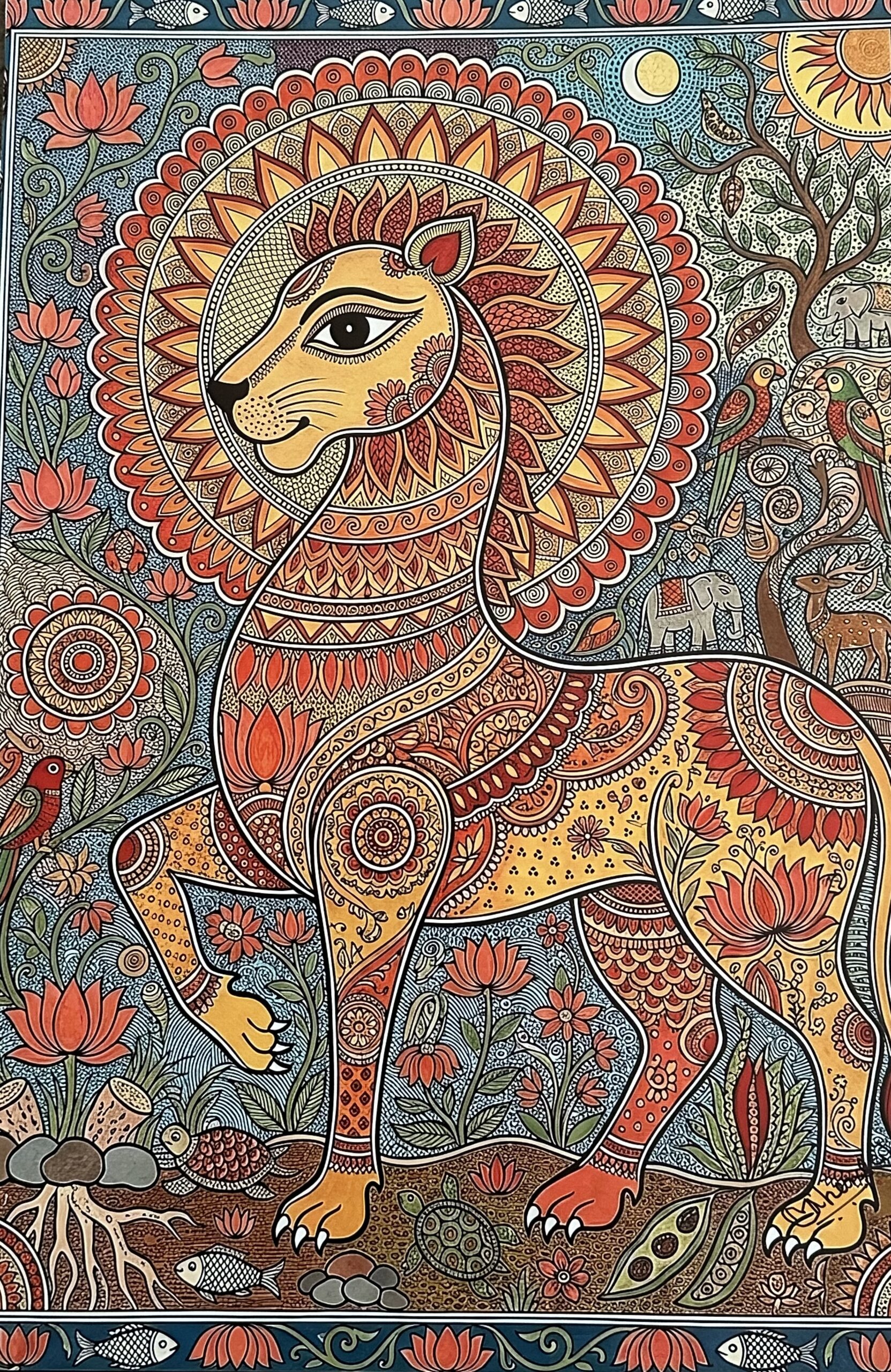
Guardians of Biodiversity: A Shared Future
This vibrant Mithila painting celebrates the richness of terrestrial biodiversity through the majestic figure of a lion surrounded by flourishing flora and fauna. Intricately rendered lotus blossoms, birds, fish, elephants, deer, trees, and other natural motifs symbolize the interconnected ecosystems that sustain life on Earth. The lion stands as a guardian of nature, representing strength, stewardship, and the responsibility to protect the delicate balance of the natural world.
Aligned with Sustainable Development Goal 15 (Life on Land), the artwork highlights the importance of conserving biodiversity, protecting wildlife habitats, and promoting sustainable coexistence between humans and nature. Drawing upon traditional Mithila visual language, the painting serves as a reminder that every species plays a vital role in maintaining ecological harmony and ensuring a resilient future for generations to come.